REVIEW · BOLOGNA
Bologna Panoramic Bike Tour
Book on Viator →Operated by TRAVELHOO · Bookable on Viator
Two hours can change how you read Bologna. This small-group bike tour uses the city’s big landmarks to teach you how Bologna works—street by street, tower by tower. I especially like the safety-minded guidance, and the way the route gives you quick context for what you’re seeing.
One thing to keep in mind: the old center can feel tight and busy, so the ride works best if you’re comfortable sharing space on the streets.
In This Review
- Key Highlights at a Glance
- Why a 2-Hour Bologna Bike Tour Works Fast
- Meeting at Via Caduti di Cefalonia and Getting Rolling
- Biking Through Bologna: What the Streets Feel Like
- Stop-by-Stop: Cavaticcio to Torre Prendiparte
- Stop 1: Cavaticcio
- Stop 2: Torre Prendiparte
- Stop 2 Bonus Tip
- The Two Towers and Via Emilia Entrance: Bologna’s Most Recognizable Loop
- Why This Stop Matters
- Piazza Maggiore and Archiginnasio: Civic Pride Meets University Power
- Stop 4: Piazza Maggiore
- Stop 5: Archiginnasio di Bologna
- Basilica San Domenico and Santo Stefano’s Seven Churches Complex
- Stop 6: Basilica di San Domenico
- Stop 7: Basilica – Santuario di Santo Stefano (Seven Churches Complex)
- What to Look For on This Stop
- What You Really Get for $54.07: Price and Value
- Who This Bologna Bike Tour Fits Best
- Should You Book the Bologna Panoramic Bike Tour?
Key Highlights at a Glance
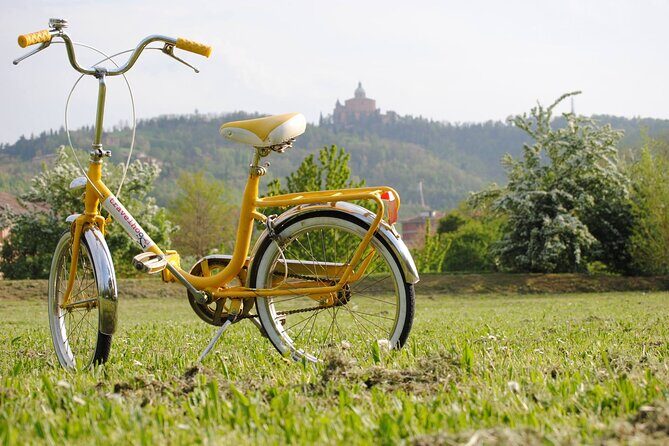
- Max 15 people, so the group stays manageable and your guide can keep an eye on the pace
- Seven major stops in about two hours, including the Two Towers and Piazza Maggiore
- English-speaking tour, with confirmations handled quickly and a mobile ticket for entry
- Tower-focused views near the city’s most recognizable skyline icons
- A mix of eras, from medieval towers to Dominican churches and the Seven Churches complex
- Public tour pace, meaning short stops instead of long, slow museum-style hanging out
Why a 2-Hour Bologna Bike Tour Works Fast
Bologna is one of those cities where you can waste a whole day wandering and still feel like you never quite learned the map. This tour tackles that problem by using motion. You move, you stop briefly, and you get enough explanation to connect the places in your head.
At roughly two hours, it’s also a smart primer. You’ll leave with names you can actually use later—two towers, Piazza Maggiore, the old university building, and the major churches tied to Bologna’s religious story. The city center is compact, but it can still feel confusing at first. A bike tour helps you get your bearings fast without waiting for a bus schedule or playing “guess the street” for hours.
The route also helps you understand why Bologna is Bologna. The city’s identity isn’t just one monument. It’s a pattern: medieval power (towers and palaces), civic life (piazzas), and religious heritage (major basilicas and complexes).
Other cycling tours in Bologna
Meeting at Via Caduti di Cefalonia and Getting Rolling
You’ll start at Via Caduti di Cefalonia, 4, 40125 Bologna and finish back at the same meeting point. That matters more than it sounds. It makes the tour easier to plan—no mystery ending location, no need to retrace steps after you’re done.
You get a mobile ticket, and confirmation comes at booking time. Since the tour is offered in English, you can follow along without needing to piece together translations from signage.
Group size is capped at 15 travelers, which tends to make for a smoother flow—especially around narrow streets and popular squares. If you want a bike-and-photos morning rather than a long sightseeing slog, this size is usually the sweet spot.
Biking Through Bologna: What the Streets Feel Like
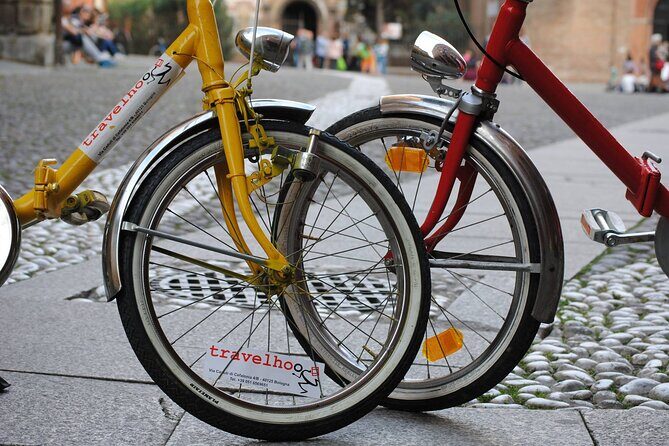
Bologna’s center is famous for its architecture, but the real-life experience includes moving around people. The good news: the tour is built for normal visitors. You’re not expected to race; you’re expected to ride safely and follow the guide’s lead.
The best part is that the guides put safety first in practice. In different groups, guides like Harry, Vanessa, and Giuseppe have been praised for being attentive, history-forward, and conscious of how bikes and pedestrians mix. One guide in particular was described as very safety-aware, which is exactly what you want when you’re riding through busy areas.
Still, here’s the honest consideration: you can’t pick the quietest streets all the time. Expect some areas where traffic and foot traffic are active. If you’re nervous on shared road space, arrive calm, listen closely to the guide, and take your cues from others in your group.
Also note the tour depends on good weather. If it’s canceled for poor conditions, you’ll be offered a different date or a full refund. That’s the right kind of policy for a bike outing.
Stop-by-Stop: Cavaticcio to Torre Prendiparte
The early part of the ride sets the tone: you’re not jumping randomly between landmarks. You’re moving through Bologna’s cultural layers.
Stop 1: Cavaticcio
Cavaticcio is tied to Bologna’s newer cultural and entertainment area that grows between MAMbo, the Cassero, and the Cineteca. Even if you don’t know these names yet, this stop helps you shift from “old town postcard” to “modern Bologna in the same footprint.”
This is a good moment to notice how Bologna uses space. The area has a festival-energy feel in summer, and it’s a reminder that the city’s story isn’t frozen. It keeps evolving.

Stop 2: Torre Prendiparte
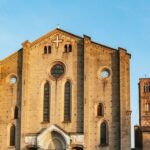
Then you swing into medieval muscle: Torre Prendiparte. Built in the 12th century by the Guelph family of Prendiparte for defense, the tower reaches about 60 meters—second only to Asinelli.
What I love about this stop is how it teaches you to read the skyline. When you see a tower like this, it’s easy to think it’s just a view point. The guide’s explanation turns it into a piece of political history—built against enemy attacks, not just built to impress.
Stop 2 Bonus Tip
Look for how the tower’s role fits into the city’s broader tower identity. Bologna wasn’t trying to be cute. It was trying to be secure.
The Two Towers and Via Emilia Entrance: Bologna’s Most Recognizable Loop
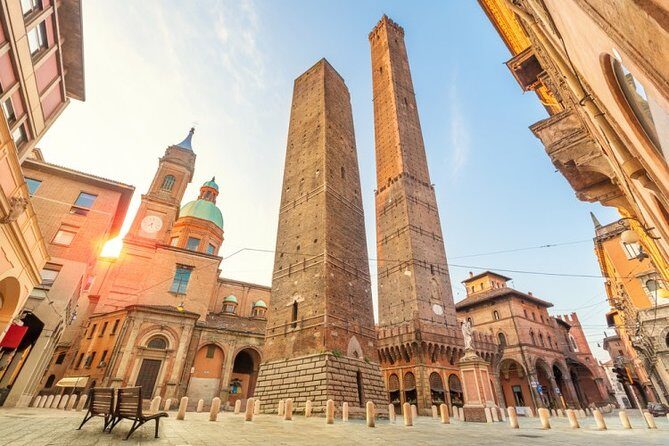
Next comes the big signature moment: Le Due Torri, with Torre degli Asinelli. This area is commonly recognized as a symbol of Bologna, and it sits near the entry point of the ancient Via Emilia.
This stop is short on purpose. In a bike tour, the goal is to help you lock in an image and a reference point. Once you’ve seen this area on the bike, it becomes easier to recognize it later—on the street, from a window, and in photos.
Why This Stop Matters
The Two Towers aren’t just a landmark you walk past. They’re a compass. Bologna’s identity shows up in how the towers anchor the city’s old layout, and the Via Emilia connection explains why the city developed the way it did.
If you’re the kind of traveler who wants the “why” behind the photo, this is one of the most satisfying parts of the tour.
Piazza Maggiore and Archiginnasio: Civic Pride Meets University Power
After the tower focus, the route moves into Bologna’s civic heart. This is where you learn how public life shaped the city’s architecture.
Stop 4: Piazza Maggiore
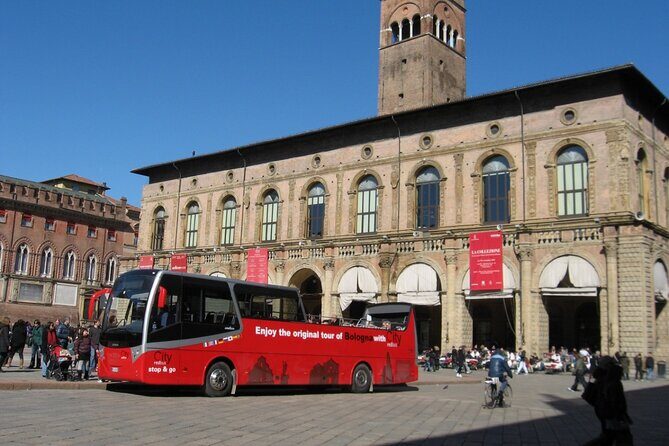
Piazza Maggiore is described as a centuries-long meeting place for locals, and it really feels like it. It’s surrounded by major medieval buildings, including Palazzo del Podestà and Palazzo d’Accursio. And looming over it is the Basilica of San Petronio, famous in part for its incomplete gray facade.
This stop is more than a photo moment. You’re learning the shape of Bologna’s social life—how a big square organized daily gatherings, official events, and civic identity.
Stop 5: Archiginnasio di Bologna
Then you head to Archiginnasio di Bologna, one of the city’s most significant buildings, and historically the seat of the ancient university.
If Piazza Maggiore tells you Bologna likes public life, Archiginnasio tells you Bologna invests in ideas. A university center in the middle of the historic district shows how education and city life grew together here.
This stop also helps you appreciate Bologna’s reputation for scholarship without turning it into vague trivia. The building’s presence makes the topic feel real.
Basilica San Domenico and Santo Stefano’s Seven Churches Complex
The final stretch turns religious and art history into something you can physically experience in a short ride.
Stop 6: Basilica di San Domenico
The Basilica di San Domenico is one of Bologna’s richest churches in art, built by the Dominican Friars. It also functions as a resting place for the remains of San Domenico di Guzman, who arrived in Bologna around 1200.
This stop works well because it ties architecture to people. You’re not just seeing a church; you’re seeing how a religious order built structures that carried meaning and memory.
Stop 7: Basilica – Santuario di Santo Stefano (Seven Churches Complex)
Then comes Santo Stefano, another major complex known as the Seven Churches complex. This is where you get the sense of Bologna stacking layers of faith in one area, and using a shared site to hold multiple religious spaces.
Even on a short stop, the value is in the understanding. A complex like this is rarely “just one building.” It’s a system—multiple parts with a single identity anchored by location and tradition.
What to Look For on This Stop
Keep your eyes moving. In places like this, the guide’s explanation usually helps you notice how the complex fits together, not just how each individual church looks from the street.
What You Really Get for $54.07: Price and Value
At $54.07 per person for about two hours, this tour sits in the mid-range for a city bike experience. The value comes from how efficiently you get orientation plus interpretation.
Here’s what you’re paying for in practical terms:
- A fixed route with major anchor points you’d otherwise stitch together yourself
- An English-speaking guide who connects the sights to the city story
- A small group (up to 15), which helps keep the pace sensible
- A format that’s easier than walking if you want to cover more ground quickly
If you’re comparing it to renting a bike and going alone, the advantage isn’t just motion. It’s the context. One tour guide’s explanations can turn “I saw a tower” into “I understood why it exists.” That kind of meaning is hard to generate from a map alone.
Still, the public-tour format is part of the deal. Expect short stops rather than long, slow time in each location. If you prefer deep Q&A and extra time lingering at every doorframe, a private format would likely suit you better (and you’ll probably feel that difference immediately).
Who This Bologna Bike Tour Fits Best
This tour is a strong match if you want:
- A morning plan that covers multiple big sights without feeling rushed
- A guide who talks through what you’re seeing—art, architecture, and city structure
- A bike outing where the group stays small and safety stays in mind
It’s also great if you’re traveling in a group of mixed backgrounds. The tour is offered in English, and in some groups guides have supported both English and Italian, which can help everyone follow even when questions get specific.
On the flip side, you might want to skip this one if you:
- Need a quieter, longer “sit and stare” experience at each site
- Want lots of time for detailed questions during stops
- Get easily overwhelmed by audio gear (there has been at least one complaint about headset sound quality)
If you’re on the fence, I’d treat this as a smart first-day tour rather than your only look at Bologna’s major churches and squares. Use it to set your mental map, then return later on foot.
Should You Book the Bologna Panoramic Bike Tour?
Yes—if you want a fast, guided way to understand Bologna’s center and you’re comfortable riding through an active street environment.
Book it especially if you’re the type who likes learning the city, not just collecting photos. The stops cover the essentials: Cavaticcio’s modern-cultural vibe, the tower power of Prendiparte, the Two Towers and Via Emilia entrance, Piazza Maggiore and the university heart of Archiginnasio, plus the big religious anchors at San Domenico and Santo Stefano.
Skip it or choose a different format if your idea of a great tour is long pauses, slow pacing, and lots of personal back-and-forth. This one moves, and it keeps stops brief by design.
If Bologna is crowded during your dates, ride smart, listen closely, and let the guide do the translating between what you see and what it means.