Bologna goes by fast on two wheels. I love how this route stacks the big Bologna sights into about two hours, and I love the radio-guides that keep the story clear while you ride. The one thing to watch: some stretches can feel traffic-close, so keep your nerves calm and your focus up.
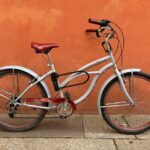
You start on a proper city bike with a helmet, and the guide stays connected through the headset system. The pace is meant for people with moderate physical fitness, and the group stays small, with a maximum of 20. It’s a good pick if you want an organized loop without wasting half your day figuring out where to go next.
If you’re coming for towers, squares, and churches—and you like learning while moving—this tour fits. If you hate any sense of pressure in busy streets, plan your timing carefully, because that’s where the ride can feel a bit intense.
In This Review
- Key things I’d plan around
- Why a Bologna Classic Bike Tour Works in 2 Hours
- Starting at Via del Monte 8a (10:30 am) and What You’ll Get
- Porta Galliera: One Wall Gate, Three Circles of Bologna
- Tower Time: Prendiparte La Coronnata and the Asinelli Moment
- Piazza Maggiore and San Petronio: Bologna’s Main Stage
- Neptune Fountain Across the Square, Then the Archiginnasio
- San Domenico and Santo Stefano: Churches That Feel Like a Whole World
- Finestrella and the Canal Story Under Bologna’s Streets
- Via Zamboni: The University Spine Toward Porta San Donato
- Pace, Traffic, and Who This Bike Tour Fits Best
- Should You Book This Bologna Classic Guide Bike Tour?
- FAQ
- How long is the Bologna Classic Guide Bike Tour?
- What’s the price per person?
- What language is the tour offered in?
- What time does the tour start and where is the meeting point?
- Is the tour wheelchair accessible or fully accessible?
- What’s included in the price?
- Are there admission fees for the stops?
- How big is the group?
- What if the weather is bad?
Key things I’d plan around
- Two hours, many highlights: you hit a tight set of landmarks without museum-level time commitments.
- Hear-the-guide tech: radio-guides help you follow directions and history while you keep pedaling.
- Tower focus: Porta Prendiparte and the famous Two Towers shape much of the experience.
- Church-hopping without fatigue: major basilicas land along the way with short stops.
- Traffic can feel close: if you’re nervous around cars, choose your day and stay attentive.
Why a Bologna Classic Bike Tour Works in 2 Hours
This is a “see a lot fast” plan, but it doesn’t feel like a race. In roughly two hours you can get oriented to Bologna’s layout: gates from older city walls, the famous tower cluster, the main civic square, and the church complexes that make Bologna feel different from many Italian cities.
The value is strong for what’s included. For $90.31, you get a city bike, a helmet, a live guide, radio-guides, and third-party liability insurance. Add the fact that the listed sights on the route are free to enter during your stops, and you’re not paying extra at every checkpoint.
One big reason I like this style of tour is how it reduces “where do I go now?” stress. You’ll ride between landmarks instead of walking them back-to-back, so you spend your energy on enjoying the sights—not managing logistics.
Other cycling tours in Bologna
Starting at Via del Monte 8a (10:30 am) and What You’ll Get
You meet at Via del Monte, 8a, 40126 Bologna (near public transportation), and the tour starts at 10:30 am. You end back at the same meeting point, so you don’t have to worry about transit or finding your way home mid-ride.
You’ll receive a mobile ticket (confirmation happens at booking), plus the essentials: a helmet, the bike, and radio-guides. On request, a raincoat is available, which matters in Bologna when weather can change quickly.
Group size is capped at 20, which makes the ride easier than big-bus tours. Still, it’s a bike tour in central streets, so you should come ready for a bit of street rhythm and concentration.
Porta Galliera: One Wall Gate, Three Circles of Bologna
Your first stop is Porta Galliera, set in Piazza XX Settembre at one of Bologna’s old city gates. This one belonged to the third and last circle of the city walls, later destroyed in the early 20th century, so it’s a rare survival of an older boundary.
What I like here is the immediate “map in your head” effect. You see a piece of the city’s perimeter history, then you ride onward and notice how Bologna’s core grew and shifted.
It’s also a short stop, about 15 minutes. That keeps the loop moving, but it still gives you enough time to understand why gates matter in a walled city.
Tower Time: Prendiparte La Coronnata and the Asinelli Moment
Then the tour locks onto what Bologna does best: towers. First comes Torre Prendiparte, around 59 meters high. It’s medieval (12th century) and nicknamed la coronata because of decorative details near the top that look like a pointed crown.
A few minutes later you reach Le Due Torri, with the Torre degli Asinelli as the anchor of the most famous tower pair. Bologna once had about a hundred towers, but only around twenty remain—so standing near the survivors gives you a sense of what changed and what endured.
This part of the ride is where the adrenaline can show up. One common reaction is that traffic feel can be a surprise, especially if you’re used to calmer cycling routes. If you prefer smooth, predictable streets, consider choosing your day wisely, since calmer conditions can make the same landmarks feel much easier to enjoy.
Piazza Maggiore and San Petronio: Bologna’s Main Stage
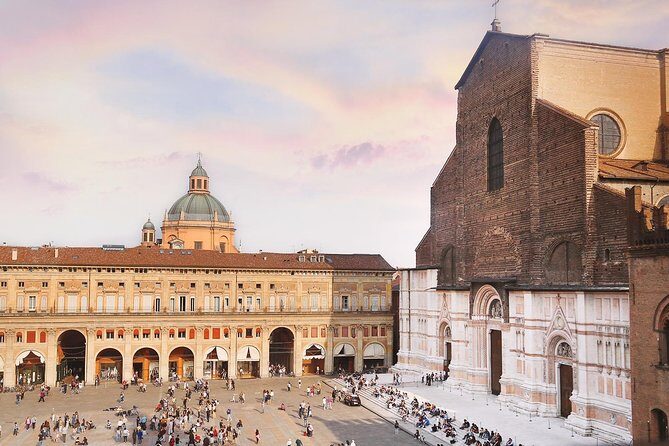
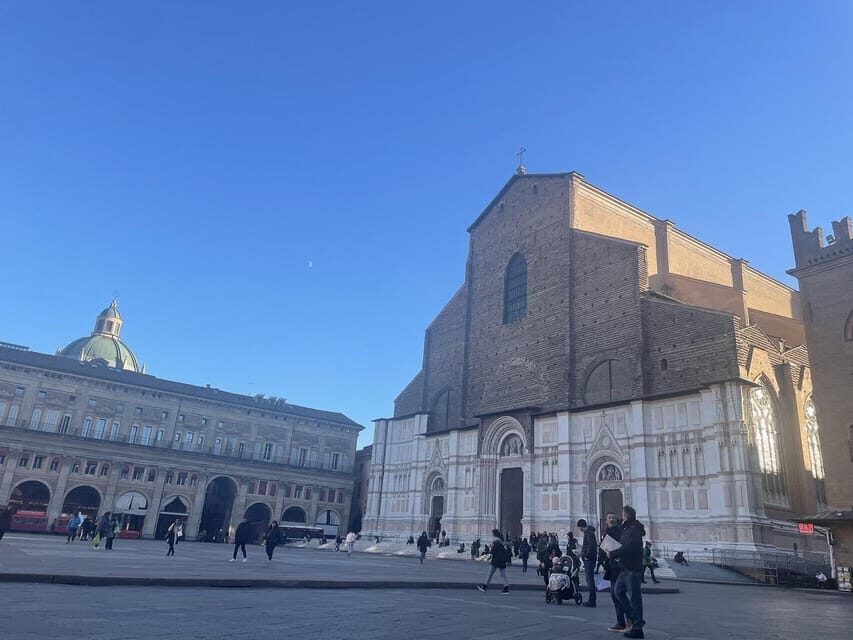
Next is Piazza Maggiore, which is the true heart of Bologna. It started as a marketplace in the early 13th century, and later became the seat of city government, with the Bologna City Council offices still residing there today.
This stop is about 15 minutes, and it works well because it’s a breath point. You can look around, reset your legs, and take in the civic scale of Bologna before the tour turns more church-centered.
Right after, you’ll pause at the Basilica di San Petronio. It’s known for its imposing size and its famously unfinished façade—so instead of a perfectly completed look, you get a sense of ambition that history interrupted.
The stop is brief (about 5 minutes), so if you want photos, be ready right when you arrive. The best pictures usually happen fast before the group pulls away.
Other guided tours in Bologna

Neptune Fountain Across the Square, Then the Archiginnasio
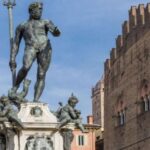
You’ll swing to Fontana del Nettuno, one of Bologna’s most recognizable landmarks. It sits in the square of the same name, facing Sala Borsa. The fountain originally had a different planned location, but it was moved so it wouldn’t be damaged by events often happening in Piazza Maggiore.
This is a short pause (around 5 minutes), but it helps you connect the city’s public life to the physical spaces you’re seeing. It’s one of those details that makes Bologna feel lived-in, not just historical.
After that, you visit the Archiginnasio di Bologna area, about 10 minutes. The building was designed by Antonio Morandi (known as Terribilia) and built in 1563. It was tied to the Pope’s control over the city, and Pope Pius IV ordered the construction of the building and also the Neptune Fountain.
If you care about the “why” behind landmarks, this stop is a payoff. You’ll start to see Bologna as a city of institutions—church, education, and civic power—each shaping what you can still visit today.
San Domenico and Santo Stefano: Churches That Feel Like a Whole World
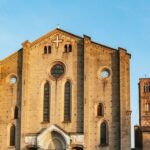
The tour continues with Basilica di San Domenico, roughly 10 minutes. It overlooks Via Garibaldi and sits near the Pavaglione area and Piazza Galvani. Historically, this zone was outside Bologna’s walls, and the church’s location connects to the earlier church of San Nicolò delle Vigne (literally San Nicolò of the Vineyards).
The mood shifts in a good way here. Bologna’s churches can feel like quiet pauses in the middle of real city movement, and this stop gives you a taste without asking you to spend hours.
Then comes the most intriguing stop on the church side: Basilica – Santuario di Santo Stefano, part of what’s commonly called Sette Chiese (Seven Churches). It sits in a piazza near the Two Towers, dedicated to the first Christian martyr, and the complex is built on Roman-era ground linked to a temple dedicated to Isis.
That stop is short (around 5 minutes), so don’t expect deep study. Instead, think of it as a “you must come back” moment, especially if you like layers of time—Roman, medieval, and religious, all in one place.
Finestrella and the Canal Story Under Bologna’s Streets
After the big names and big squares, you get a quieter, clever stop: Finestrella di Via Piella. It opens onto a canal—part of the Canale delle Moline network—that once flowed under the city in an area that used underground waterways for trade and exchanges.
This is one of those Bologna details that makes you slow down. You’ll understand that the city wasn’t just built on top of history; parts of its old economy moved underneath it.
The stop is about 10 minutes, which is enough time to look, ask questions, and get the geography straight in your head before you keep rolling.
Via Zamboni: The University Spine Toward Porta San Donato
To close the loop, you ride along Via Zamboni, the iconic street in Bologna’s university area. This street connects the Due Torri area toward Porta San Donato, one of the gates that survived the destruction of the city’s third and final wall.
This last segment is about 10 minutes, and it’s a good way to end because it helps you link landmarks to everyday life. Even if you don’t know Bologna’s academic background yet, you’ll feel the city’s student energy just from the street’s role and design.
You’re also riding your way out of the “major attraction bubble” and into the parts of Bologna that feel more lived-in. It’s a fitting final note before you return to the meeting point.
Pace, Traffic, and Who This Bike Tour Fits Best
This tour is best for people who like short stops and guided context, not people who want long self-guided wandering at every stop. You’re moving often, with stops ranging from 5 to 15 minutes, so you get a taste of everything instead of a deep focus on one thing.
The most important practical consideration is street traffic. Some riders report that the riding can feel close and intense, with heart rates going up from the pace and the proximity of vehicles. That doesn’t mean it’s unsafe in the usual sense, but it does mean you should treat it like real city cycling: hold a steady line, don’t drift, and listen for the guide’s instructions.
On the bright side, when the streets are calmer—one example is a Sunday morning ride—the route can feel much easier to enjoy. If you can pick dates, choose a time when the city feels less busy.
If you have moderate fitness, you’ll likely be fine. If you want a totally stress-free ride, you may feel more comfortable on a walking tour instead, or you should arrive with patience and confidence on a bike.
Should You Book This Bologna Classic Guide Bike Tour?
Book it if you want a fast, guided, landmark-heavy Bologna loop that includes bikes, helmets, and radio-guides. It’s also a smart first booking if you’re new to the city and want a clear mental map: towers, Piazza Maggiore, major churches, and the canal-side details that most people miss.
I’d pass or rethink if you hate any traffic proximity or you’re very sensitive to pressure while riding. This is not a quiet countryside pedal. It’s central Bologna, with the energy that comes with that.
Also factor in weather. The tour requires good weather, and if it’s canceled due to poor conditions, you’ll be offered a different date or a full refund. If you’re traveling around unpredictable days, build in flexibility.
Overall, this is excellent value for a short time window. You’ll leave knowing where Bologna’s key sights are and how they connect—exactly what you want before you plan your next day of slower exploring.
FAQ
How long is the Bologna Classic Guide Bike Tour?
It runs for about 2 hours.
What’s the price per person?
The price is listed as $90.31 per person.
What language is the tour offered in?
The tour is offered in English.
What time does the tour start and where is the meeting point?
It starts at 10:30 am. The meeting point is Via del Monte, 8a, 40126 Bologna BO, Italy.
Is the tour wheelchair accessible or fully accessible?
The provided info only says travelers should have a moderate physical fitness level. No specific accessibility details are listed.
What’s included in the price?
Included are a city bike, helmet, radio-guides, third-party liability insurance, the tour guide, and a raincoat on request.
Are there admission fees for the stops?
All the listed stops in the route show Admission Ticket Free.
How big is the group?
The maximum group size is 20 travelers.
What if the weather is bad?
The tour requires good weather. If it’s canceled due to poor weather, you’ll be offered a different date or a full refund.