REVIEW · BOLOGNA
Bologna Surroundings Photo Tour: Rolling Hills and Ravines
Book on Viator →Operated by Francesco Fanti · Bookable on Viator
Sunset in Bologna country feels like a secret. I love how this photo tour turns the hills around Bologna into a guided search for great light with local expert Francesco Fanti. You’re driven between rural stops, not herded through crowds, and you spend enough time at each place to actually get the shot you want.
Two things I really like: first, the private transport means you don’t have to figure out taxis or timetables to reach rural areas. Second, the whole approach is built around photography habits—waiting for the right tone (golden hour or blue hour), slowing down, and letting you work a scene until you’re satisfied.
One consideration: this experience depends on weather and the light that comes with it. If conditions aren’t good, you may need a different date, so it helps to build in some scheduling flexibility.
In This Review
- Key things to know before you go
- Bologna hills photo tour: what makes it different
- Leaving the city: pickup that works with Bologna traffic
- Stop 1: Parco Regionale dell’Abbazia di Monteveglio
- Stop 2: Valsamoggia and the feel of quiet villages
- Stop 3: Monte San Pietro for ridgelines and framing
- Stop 4: Rocca dei Bentivoglio and medieval stone from the right angle
- Sunset on the badlands: why the ending is the point
- Pace, interaction, and who this is best for
- Gear reality check: what you should bring
- Transportation and the quiet luxury of not figuring things out
- Price and value: $481.65 for up to 3 people
- Weather and light: the one factor you can’t control
- Should you book this Bologna hills photo tour?
- FAQ
- How long is the Bologna surroundings photo tour?
- Is this tour private, or will I be with other groups?
- Do you pick up from inside Bologna, or only from outside the city?
- What language is the tour offered in?
- Is private transportation included?
- Do I need my own camera gear?
- Is there a best time of day to take this tour?
- What happens if the weather is poor?
Key things to know before you go
- Time for light, not checklists: You stay at locations long enough to try different angles and settings.
- Off-the-usual-route places: You’ll reach rural corners that are tough to access without a car.
- Photography-first guidance: The leader is also a photography teacher, with a focus on getting your exposure and mood right.
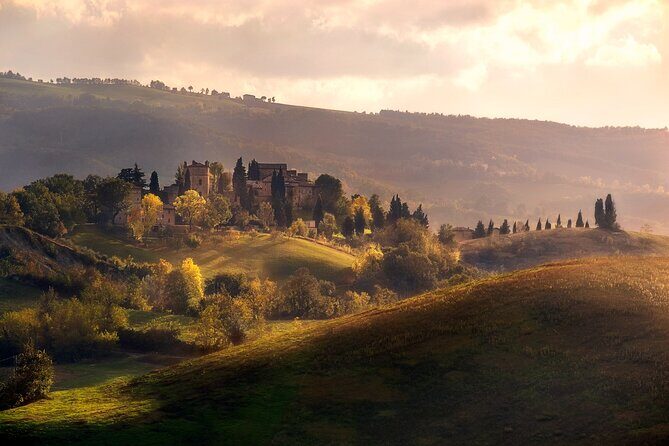
- Sunset over badlands and hills: The late-day payoff is a dramatic vantage point designed for color and atmosphere.
- Private group format: It’s just your group (up to 3), so you can ask questions and move at your pace.
Bologna hills photo tour: what makes it different
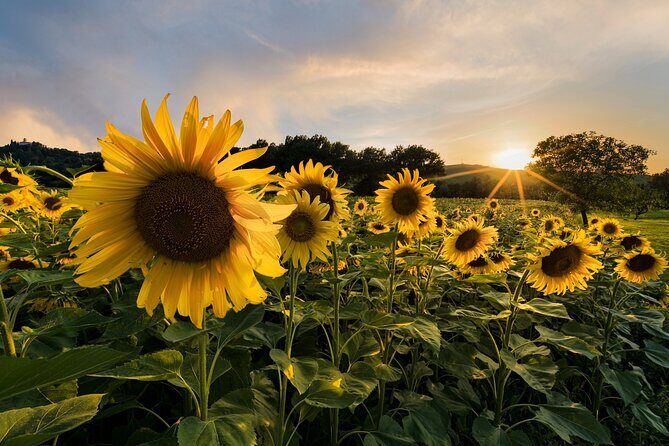
This isn’t a sightseeing van with a camera stuck in your hand. It’s a photography session in motion, with a driver who also thinks like a shooter: What time is it? What direction is the light hitting? What does the sky add—or take away?
You’ll be out for about 6 to 7 hours, and the plan is timed to the day’s mood, especially for an afternoon start that leads into sunset. That rhythm matters because the countryside around Bologna can look flat in midday. With the right angle and the right color, you get depth: ridges, valleys, stone textures, and that soft glow that makes photos feel three-dimensional.
And yes, you’re in good hands. Francesco Fanti is the local photographer guiding you, and multiple past participants highlight how patiently he works with different experience levels—so even if you’re still learning your camera, you’re not left behind.
Other photography tours in Bologna
Leaving the city: pickup that works with Bologna traffic
Bologna’s center is not friendly to random car pickups. This tour plans around that reality by using hotel pick-up or a near-to-hotel point, depending on where you’re staying.
In practice, you’ll message your location and the team will define a pickup point that’s convenient to you without fighting restricted city-center traffic. That’s a real quality-of-life win, especially if your hotel is in the older core and getting a taxi could turn into a time sink.
Once you’re rolling into the hills, you’ll feel the change right away. The countryside gives you space: rolling ground, medieval silhouettes on ridgelines, and viewpoints that are far from the usual photo angles.
Stop 1: Parco Regionale dell’Abbazia di Monteveglio
Your first stop is the Parco Regionale dell’Abbazia di Monteveglio area. This is a great opener because it sets the tour’s tone: rural scenery with built-in photo structure—paths, stone, and layered edges that help you compose.
This is also where you’ll likely start thinking in light. A photographer guide doesn’t just point at a view; he helps you see what’s happening in the sky and where to place your framing so the scene gets shape. If the light is warm, you can chase cozy tones. If it’s cooler, you can work angles that emphasize contrast and mood.
A possible drawback at the first stop: if you arrive with expectations of a quick photo spree, it may feel slow. That’s on purpose. The whole method is to give you time until your photos look right, not time until the clock says next.
Stop 2: Valsamoggia and the feel of quiet villages
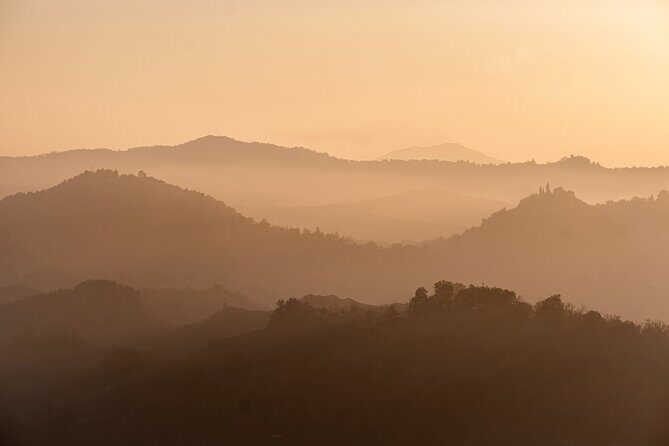
Next up is Valsamoggia. This is the kind of zone that’s perfect for photographers because it mixes countryside geometry with places that feel lived-in.
Think of it as rolling terrain punctuated by villages and rural land patterns. It’s a useful stop if you want both wide shots (showing ridges and valleys) and tighter compositions (stone details, village edges, and leading lines).
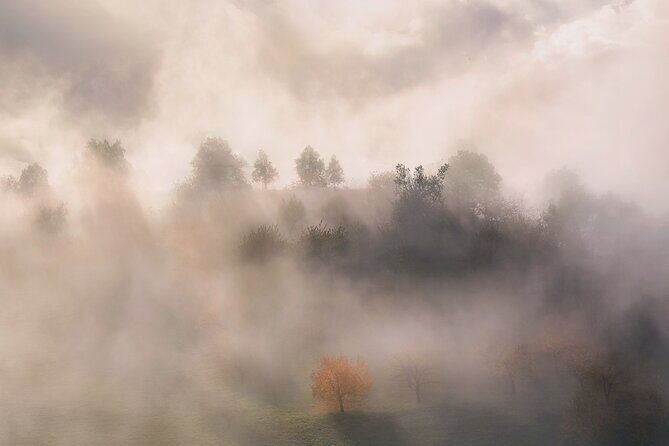
Where I think this stop adds value for you: it builds variety without requiring you to constantly swap locations. The region gives you enough texture to keep experimenting—especially when the clouds or fog start changing the contrast. In the kind of conditions that create soft, diffused light, the scenery can look more sculpted than you expect.
Stop 3: Monte San Pietro for ridgelines and framing
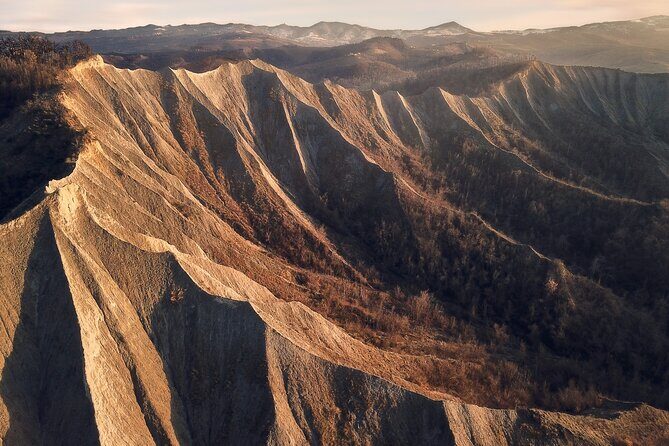
Monte San Pietro is another key stop where the views start to feel more dramatic. On this kind of hillside, you can often photograph in layers—foreground shapes, mid-ground village forms, and then the distance fading into atmospheric haze.
For photography, that layering is gold. It gives your compositions depth even if the scene isn’t filled with landmarks. And since the guide is focused on light conditions, you’ll be thinking about where the sun is hitting and how the sky color changes minute by minute.
One thing to keep in mind: hillside stops can mean walking and repositioning for the best angle. You don’t need to be a hiker, but you should be ready to move a bit, stop, shoot, and then move again.
If you’re the kind of photographer who likes to control framing—centering a subject, using a valley line, balancing sky versus ground—this is the stop where you’ll likely enjoy the most time.

Stop 4: Rocca dei Bentivoglio and medieval stone from the right angle
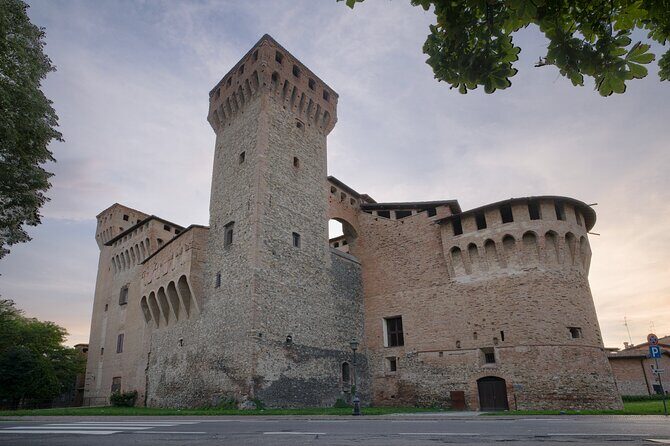
Rocca dei Bentivoglio brings the medieval feel into the mix. Fortified stone and elevated viewpoints are built for photos: you get strong silhouettes, textures that show up best in side light, and compositions that look good even when the sky is moody.
This is also a great place for the guide’s core strength: choosing where you stand and when you press the shutter. The best time for stone textures is often when the light is angled—late-day light can make walls look dimensional instead of flat.
The only potential drawback here is personal preference. If you’re hoping for modern urban scenes, this stop may feel more about mood and structure than about city life. But if you want Bologna’s surroundings—stone, ridgelines, and countryside scale—this fits the brief perfectly.
Sunset on the badlands: why the ending is the point
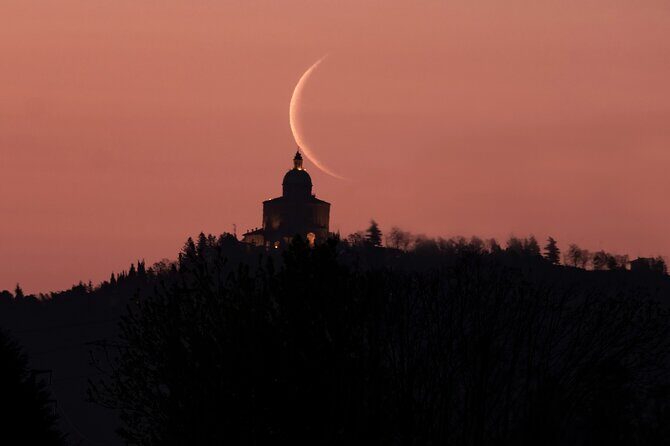
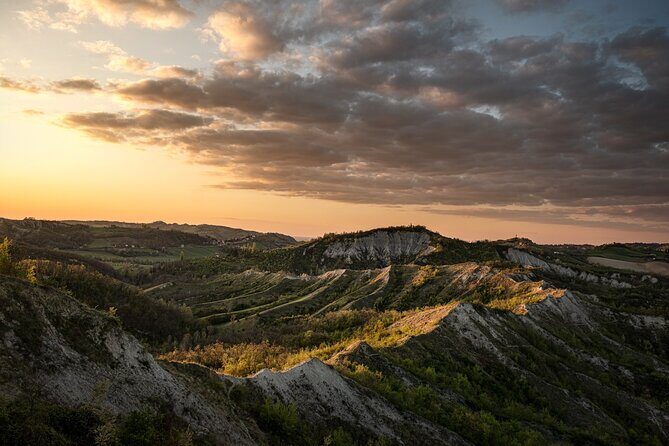
The tour’s finish is the big payoff: sunset from a vantage point described as badlands, with hills and dramatic color. This is exactly the kind of place that makes the whole day feel worth it.
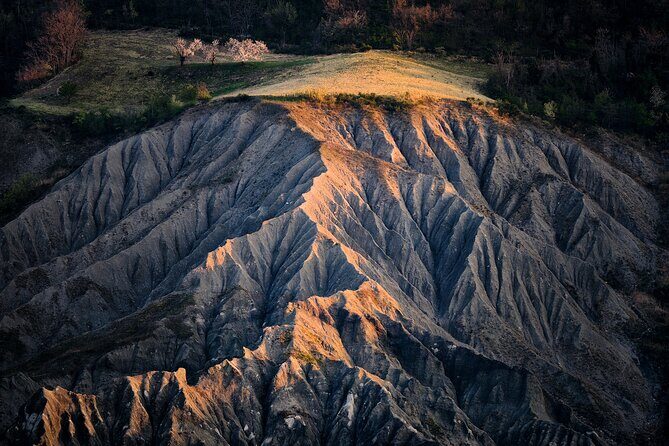
Why it works for photos: badlands-style terrain often has strong shapes and erosion lines. When the sun drops low, those lines turn into a map of textures—dark shadows, warm highlights, and sky color that can swing quickly. Even when clouds show up, they can add softness or create that patchwork effect that photographers love.
Also, timing matters here. This tour is best in the afternoon so you reach the final viewpoint with enough time to scout angles and then wait for the light to change. You’re not rushing. You’re working the scene until it clicks.
The best part for you to plan around: set aside mental space for waiting. If you come from fast tours where you’re always moving, the last leg may feel like slow patience. But that’s also where the colors and atmosphere show up—and where your photos usually improve the most.
Pace, interaction, and who this is best for
This is a private experience, and that changes the whole feel. Up to 3 people means you can ask questions without the pressure of a big group.
The tour is described as a photography experience created by a photographer for photographers, and the vibe fits that. The guide spends time at each location, focusing on light conditions—warm golden tones or cooler blue-hour nuances—so you can learn how to adapt your camera settings and composition as the scene changes.
In terms of skill level, the available information suggests it works across experience levels, including beginners. More than once, past participants praised the patience while they worked on their shots and settings. So you don’t have to be a gear expert, but it does help if you’re ready to participate—ask questions, try a few frames, and listen when the guide suggests a different angle or timing.
Your non-photographer companion might enjoy it too, because there’s still real scenery and a strong sunset payoff. Just know the schedule is built around shooting, not sightseeing stops with quick photo pauses.
Gear reality check: what you should bring
The tour explicitly notes that you should have your own photography gear. That sounds obvious, but it has a practical impact: you’ll be out moving between spots, likely experimenting with settings, and the guide can help you with framing and exposure choices.
If you’re bringing a camera, you’ll probably want:
- A strap and a way to keep hands free while repositioning
- Enough battery for a long afternoon into sunset
- A lens or focal length mix that can handle both wide viewpoints and tighter compositions
If you’re not bringing a camera at all, this tour may still be beautiful, but you’ll get less value from the guidance component. The day is built around photography learning and shooting.
Transportation and the quiet luxury of not figuring things out
A big part of the value here is simple: private transportation is included. You don’t need to plan taxis, negotiate rural routes, or guess when you’ll be able to return to Bologna.
That also means the guide can choose locations based on light timing, not just access. Rural stops can be hard to reach in a time-efficient way unless someone has a car route planned. By handling the driving, the team keeps the day focused on photography.
For you, that equals less stress and more shooting time.
Price and value: $481.65 for up to 3 people
At $481.65 per group (up to 3), this is not a budget tour. But it’s also not just a ride and a few viewpoints.
Here’s what you’re paying for in real terms:
- A local photographer guide with teaching focus, not a generic escort
- Private transport from and back, including hotel pick-up or a near-hotel point
- Time built around light, meaning you’re not speed-running stops
- Multiple countryside locations plus a sunset finale from a dedicated viewpoint
- Bottled water, and a plan designed around afternoon-to-sunset pacing
If you’re traveling solo with a camera, it may feel pricey compared with larger-group tours. If you’re two or three people splitting it, the value becomes much easier to justify—because the guide’s attention and patience stay focused on your group.
Also, if you care about getting better photos rather than just collecting a few decent images, paying for guidance and timing is often the better trade than paying for a longer list of attractions.
Weather and light: the one factor you can’t control
This experience requires good weather, and if it gets canceled because of poor conditions, you’ll be offered a different date or a full refund. That’s not a small detail. In a photo tour, weather isn’t just comfort—it’s part of the image.
The good news: changing light can still create great results. The key is flexibility—being ready to accept that the sky might turn foggy or dramatic, and that the guide may adjust your timing or angles based on what’s happening.
If you’re the type who needs perfect sunshine at all times, you might feel frustrated. If you enjoy variety—diffused light, cloud color, or the way fog changes valleys—you’ll probably find the day more fun than you expected.
Should you book this Bologna hills photo tour?
Book it if you want more than views—you want better images, taught with patience and timed for real light. You’ll get the most value if you’re bringing your own camera gear and you’re willing to slow down, try compositions, and wait for the scene to improve.
Skip it if you’re looking for a fast, casual sightseeing day with minimal effort. Also, if your schedule is tight and you can’t shift plans when weather affects timing, this may add stress.
If you’re a photographer—or even a photographer-in-progress—and you’d love to see Bologna from the rolling hills and ravines with a guide who plans the light, this is one of those tours that tends to pay you back in photos, not just memories.
FAQ
How long is the Bologna surroundings photo tour?
It runs about 6 to 7 hours.
Is this tour private, or will I be with other groups?
It’s a private tour/activity, and only your group participates (up to 3).
Do you pick up from inside Bologna, or only from outside the city?
Hotel pick-up or a near-hotel meeting point is offered. The pickup point is defined based on where you’re staying because the city center is closed to traffic.
What language is the tour offered in?
The tour is offered in English.
Is private transportation included?
Yes. Private transportation is included, so you don’t need to arrange taxis.
Do I need my own camera gear?
Yes. You should have your own photography gear.
Is there a best time of day to take this tour?
The best time is in the afternoon so you can include a sunset over the badlands and hills.
What happens if the weather is poor?
This experience requires good weather. If it’s canceled due to poor weather, you’ll be offered a different date or a full refund.