REVIEW · BOLOGNA
Bologna : a walk into history
Book on Viator →Operated by Elisa Cornacchia · Bookable on Viator
Bologna can feel like it turns pages. This private walk is built around real landmarks and the stories behind them, moving from Piazza Maggiore into lanes that explain how the city changed over time. I especially loved the stop-by-stop pace and focus, plus the way guide Elisa Cornacchia kept answering questions without turning it into a lecture. One thing to consider: the tour is around medieval streets and churches, so you’ll want comfy shoes and you may deal with crowds around the big sights.
Pick this up in the morning or afternoon, and you’ll still get a tight storyline: squares, university history, food-market lanes, religious sites, and the two towers that became Bologna’s symbol. The route also includes the Jewish ghetto area and the Finestrella, which makes the experience more than just postcard Bologna. If you’re hoping for a long climb or a museum-heavy day, this isn’t that kind of tour—it’s a smart walking tour designed to help you read the city as you go.
In This Review
- Key highlights worth your time
- Walking Bologna’s layers: what this tour really teaches you
- Meeting at Via dell’Indipendenza and getting the timing right
- Piazza Maggiore and via Rizzoli: learning how the city plan evolved
- San Petronio Basilica: Petronius, patronage, and art you can actually follow
- Archiginnasio di Bologna: the university seat stop that needs one extra ticket
- Quadrilatero and Palazzo della Mercanzia: food lanes plus Middle Ages trade power
- Santo Stefano’s Sancta Jerusalem: symbols and the meaning behind the seven churches
- Le Due Torri: how the towers became Bologna’s symbol
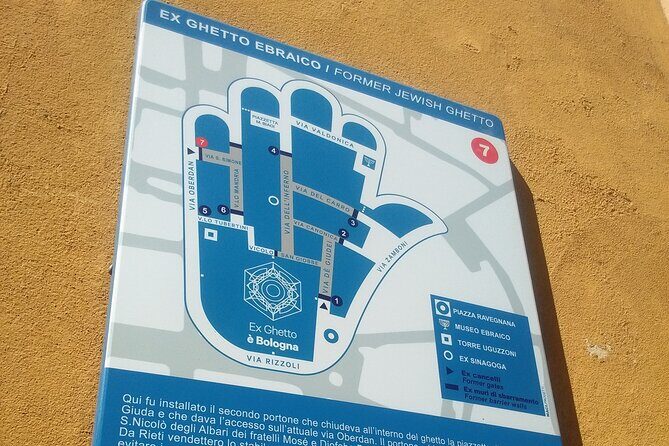
- Via De’ Giudei and the Jewish ghetto story you can’t skip
- Finestrella: the little Venice corner and how to keep exploring after
- Price and value: what $209.44 really buys you
- Who should book this Bologna walk?
- Should you book this Bologna Walk Into History tour?
- FAQ
- Where does the tour start and end?
- How long is the tour?
- Is this tour private?
- Are tickets included?
- Do I need to buy a mobile ticket?
- What is the cancellation window?
Key highlights worth your time
- Private pacing with Elisa Cornacchia: you can ask questions and keep the flow at a comfortable speed
- UNESCO Bologna landmarks on foot: Piazza Maggiore, San Petronio Basilica, and more in one route
- Bologna’s daily-life layers: the Quadrilatero market area and Middle Ages trade context at Palazzo della Mercanzia
- Santo Stefano’s Sancta Jerusalem: a guided explanation of the seven churches idea and symbols
- Finestrella, the “little Venice” view: a quieter ending that helps you understand Bologna’s older look
Walking Bologna’s layers: what this tour really teaches you
Bologna is one of those cities where the streets don’t just connect sights. They explain change—politics, education, trade, religion, and everyday eating—all stacked in walkable distances. What I like here is that the tour doesn’t only point. It tells you why each place matters to Bolognese identity and memory.
This is also the sort of experience that makes you look smarter fast. You’ll walk in not knowing the city’s logic, then start noticing patterns: how a square was planned, how a university institution shaped the area, and how markets and guild/trader buildings sat right in the city’s pulse.
The biggest payoff is the storytelling glue. You’re not trying to remember ten separate facts. You’re getting a sequence of meaning—almost like a guided “translation” of Bologna’s architecture and street layout.
Other walking tours we've reviewed in Bologna


Meeting at Via dell’Indipendenza and getting the timing right
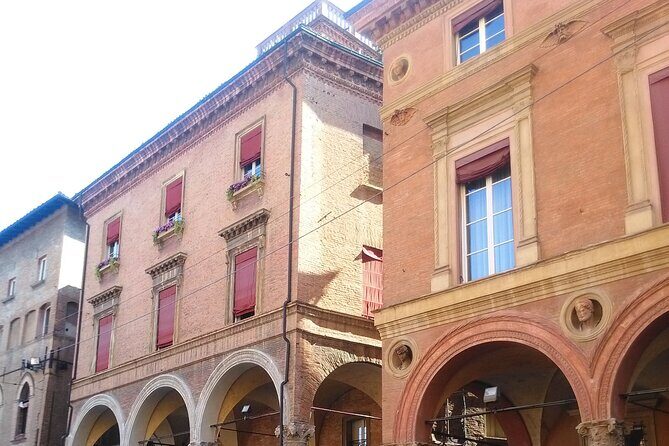
The tour meets at Via dell’Indipendenza and ends there too. It’s an easy place to return to when you’re done, and it’s also listed as near public transportation, so you’re not stuck guessing how to get out once you finish.
You’re looking at about 3 hours, which is a very workable window. It’s long enough to cover the main beats—Piazza Maggiore, San Petronio Basilica, the university area, and the late-tour details like Finestrella—but short enough that you’re not totally cooked for the rest of your day.
Also note the tour format: it’s a private group (only your group participates). That matters. When you’re paying for a guide, you want your questions answered in real time, not filtered through a loud group. Based on what guide Elisa Cornacchia is like, this tour tends to keep questions moving and the pace feeling human.
Piazza Maggiore and via Rizzoli: learning how the city plan evolved
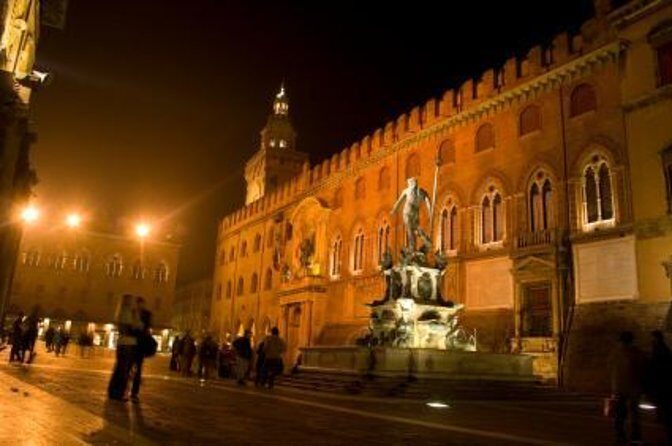
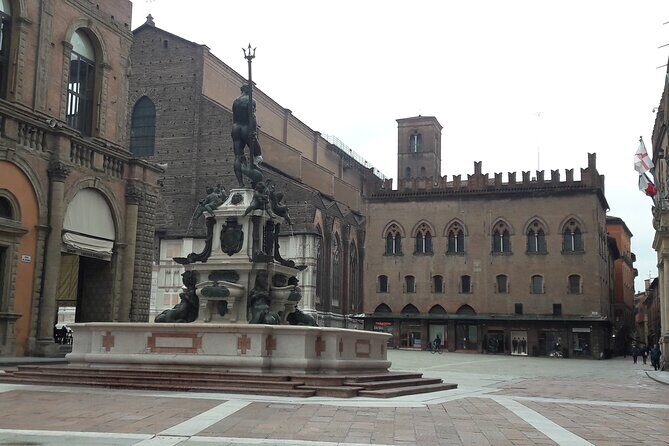
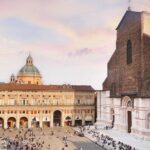
The tour starts with Piazza Maggiore, and you’ll get a guided look at the important palaces around the square. What makes this stop more than a quick photo moment is the conversation you’ll have about the city plan and how it changed over time—including via Rizzoli.
That matters for first-time Bologna visits. Squares here are not just pretty open spaces. They’re clues. When you understand the original plan and then see evidence of how it has shifted, you start reading the city like it’s a map drawn in pencil and rewritten in pen.
Practical tip: give yourself a minute to stand back from the square edge during this stop. If you only focus on faces and statues close-up, it’s harder to absorb the bigger “how the city is laid out” story.
San Petronio Basilica: Petronius, patronage, and art you can actually follow
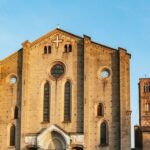
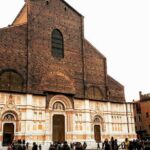
Next comes Basilica di San Petronio, and this is where the tour leans into local meaning. Your guide tells the story of Petronius, Bologna’s patron saint, and explains why the basilica is so important to the Bolognese people.
This stop also includes an explanation of important works of art you can see inside. The value here isn’t just learning what’s there. It’s learning how the guide wants you to look—what to notice first and what symbols or details tend to matter to locals.
A heads-up: basilicas are often busy. You’ll want to move gently and follow your guide’s pace, especially if others are stopping to pray, read, or take a moment. The benefit is that the guide can help you avoid aimless wandering and point you toward what’s meaningful.
Archiginnasio di Bologna: the university seat stop that needs one extra ticket
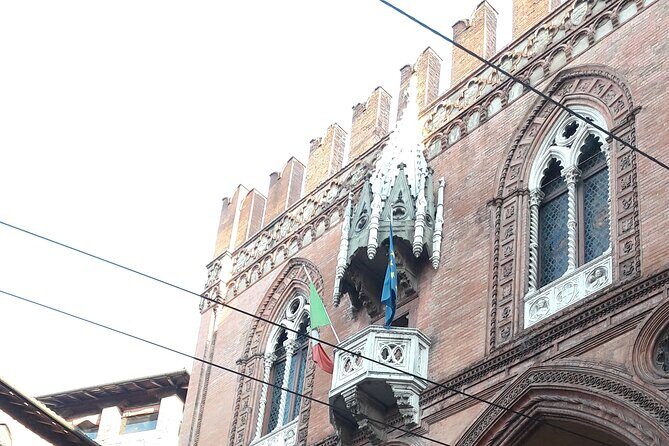
Then you head to Archiginnasio di Bologna, described as the first official seat of the university in Bologna. This stop is short and focused—perfect for getting the concept without turning it into a full museum day.
One practical detail: admission to Archiginnasio is not included. So you’ll either plan to buy that ticket yourself or be ready for your guide to guide you in a way that doesn’t require entry. If you’re someone who likes to see inside, budget extra time and money for that ticket so you don’t feel rushed.
Why I think this stop is worth it: university history in a city isn’t abstract. It shapes neighborhoods, institutions, and long-term identity. Even with a brief visit, it helps you understand Bologna as a place that has educated people for a long time.
Other historical tours in Bologna

Quadrilatero and Palazzo della Mercanzia: food lanes plus Middle Ages trade power
The route then moves into Quadrilatero, the famous food district where the local food market takes place daily. This isn’t just a “walk through shops” moment. Your guide connects the market streets to what the city was like as a living trading hub.
Right after, you’ll stop at Palazzo della Mercanzia, which plays an important role in the Middle Ages for foreign traders entering the city. That combination is smart: you see today’s food-market rhythm and then you get the historical frame of why trade mattered here.
Even if you don’t stop for a full meal, you’ll still learn something useful: you’ll understand that Bologna’s eating culture isn’t separate from its street history. It’s part of the same system—people coming in, buying, exchanging, and building community around daily commerce.
Practical tip: if you’re sensitive to food aromas, expect them. This area is actively used. The good part is that you’re walking through a place that’s still functioning, not a staged “historic street.”
Santo Stefano’s Sancta Jerusalem: symbols and the meaning behind the seven churches
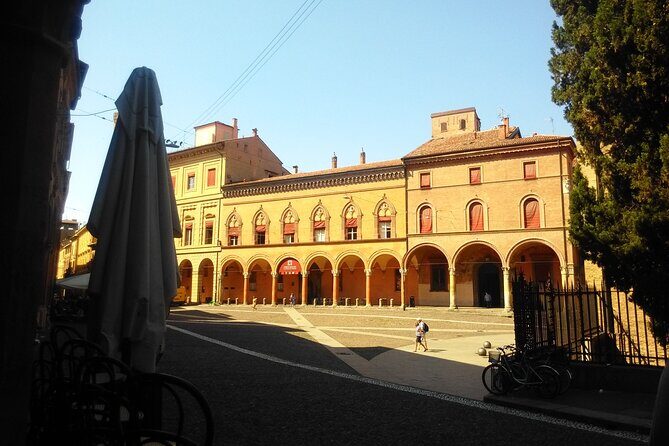
One of the most memorable stops is Basilica – Santuario di Santo Stefano, known as the seven churches, also referred to as Sancta Jerusalem. Your guide explains why this complex has that reputation and discusses its close connections with the Saint Sepulcher.
This stop also includes guidance on ancient symbols present inside. That’s the difference between walking into a church and walking out feeling you understood it. Instead of staring at details randomly, you’ll know which symbols to pay attention to and what they’re meant to communicate in the context of the site.
Time-wise, this is one of the longer stops on the walk, and it earns that length. It’s not only “what to see.” It’s “why this place developed a special religious reputation,” and why Bologna locals treat it as meaningful.
Le Due Torri: how the towers became Bologna’s symbol
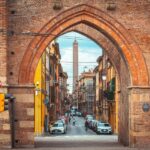
Next up: Le Due Torri, specifically Torre degli Asinell and Torre degli Garisenda. You’ll stop by the towers and learn their ancient function and why they became one of Bologna’s symbols.
This is one of those moments where the city becomes instantly recognizable. Even before you leave, you’ll understand what these towers represent: identity, history, and the kind of civic power that shows up in stone.
Practical note: since the towers are a landmark stop, the area can get crowded. Keep your expectations realistic—this is about the story and perspective, not a perfectly empty viewpoint.
Via De’ Giudei and the Jewish ghetto story you can’t skip
Then you’ll walk via Via De’ Giudei and into the narrow streets of the Jewish ghetto area, where Jews were forced to live until Italian Unification. This stop matters because it grounds Bologna’s history in real human experience, not only art and architecture.
Your guide helps you understand what you’re seeing in context. Instead of treating the area like a backdrop, you learn how law and community shaped where people could live and how that history is still part of the street identity.
A practical consideration: expect a respectful tone and slower footwork here. You’re moving through a place with historical weight, so it’s smart to keep your phone use minimal and your attention on the guide’s explanation.
Finestrella: the little Venice corner and how to keep exploring after
The tour ends at Finestrella, described as one of Bologna’s hidden corners—known as the “little Venice.” The guide uses this stop to help you understand how Bologna looked in the past.
The value of finishing here is simple: it gives you a visual “last thought.” You’ve spent hours learning about institutions, religious complexes, trade, and civic symbols. Then you end with a water-adjacent detail that helps the city feel lived-in historically, not just monumental.
If you want to get more from the last minutes, do this: after the tour ends, keep your eyes on the small details you just learned to notice. The tour trains you to see street logic and symbolic meaning. Using that immediately while you’re still in the area is where the learning sticks.
Price and value: what $209.44 really buys you
The price is $209.44 per group, up to 10 people, for about 3 hours with a professional guide. If you fill the group (10 people), that’s about $21 per person. If it’s just two or four people, it’s higher per person—but you’re buying a private route and a tailored guide pace.
This pricing can be good value in Bologna because so many of the major stops are spread out across different themes: churches, university history, market streets, and symbolic towers. A group walk helps you connect the dots quickly, and since it’s private, you get answers rather than vague “you’ll see this later” guidance.
Also, the tour includes mobile ticketing, and several stops have free entry (Piazza Maggiore, San Petronio Basilica, Quadrilatero, Palazzo della Mercanzia, Santo Stefano, Le Due Torri, Via De’ Giudei, and Finestrella). The only noted exception is Archiginnasio di Bologna, where admission is not included.
So, you’re mostly paying for guidance, route design, and context—not for a stack of entrance fees.
Who should book this Bologna walk?
This is a strong fit if you want a guided sense of place without spending the day inside museums. If you like walking, asking questions, and having a guide connect squares, churches, markets, and street history into one coherent story, you’ll likely love it.
It’s also a good choice if you’re traveling with friends or family and want everyone to move at the same pace. Private tours make it easier to keep the group together on tight streets and around crowded landmarks.
If you’re the type who hates church interiors or wants only outdoor views, this might feel a bit religious-heavy for you, because the route clearly includes key basilicas and the Santo Stefano complex.
Should you book this Bologna Walk Into History tour?
I’d book it if you want Bologna to make sense quickly. The structure—Piazza Maggiore to San Petronio, then education history, the Quadrilatero and Palazzo della Mercanzia trade context, and finally the towers, ghetto streets, and Finestrella—gives you a full city portrait in one morning or afternoon.
Skip it only if you want a long, deep museum day, or if you’re uncomfortable walking through active market and church areas. Also remember that Archiginnasio admission isn’t included, so if that stop matters most to you, plan for the extra ticket.
The bottom line: for a few hours of guided walking with Elisa Cornacchia, you get clear context, a workable pace, and stops that help you read Bologna like an insider instead of a tourist clutching a map.
FAQ
Where does the tour start and end?
It starts and ends at Via dell’Indipendenza, Bologna.
How long is the tour?
The tour lasts about 3 hours.
Is this tour private?
Yes. It’s listed as a private tour/activity, with only your group participating.
Are tickets included?
Many stops are free to visit (including Piazza Maggiore, San Petronio Basilica, Quadrilatero, Palazzo della Mercanzia, Santo Stefano, Le Due Torri, Via De’ Giudei, and Finestrella). Archiginnasio di Bologna admission is not included.
Do I need to buy a mobile ticket?
You’ll receive a mobile ticket.
What is the cancellation window?
You can cancel for a full refund if you cancel at least 24 hours before the experience’s start time.