REVIEW · BOLOGNA
Private or semi-private tour of the historic center of Bologna
Book on Viator →Bookable on Viator
Piazza Maggiore is the mapless way to start Bologna. This guided walk threads together the city’s most important buildings and symbols, from Neptune’s fountain to the University of Bologna’s historic hub. You get a small-group pace, plus a real sense of how the streets connect the past to today.
What I like most is how the guide turns famous sights into understandable stories—you don’t just see stone, you learn what it meant at the time. I also love the stop at Via Pescherie Vecchie, where the medieval market lanes make it easy to grab a casual glass of wine or street food without breaking the rhythm of the walk.
One possible drawback: the time is tight. Expect a brisk, highlight-focused route in about two hours, so if you want long interior time in churches and museums, you may need to plan a separate follow-up visit.
In This Review
- Key things you should know before you go
- Getting your bearings fast: Piazza Maggiore, Neptune, and Enzo
- Palazzo d’Accursio: when city government feels like a castle
- Basilica di San Petronio: the church that doesn’t play by cathedral rules
- Archiginnasio: university life, coats of arms, and an anatomy theater vibe
- Via Pescherie Vecchie: medieval market lanes and a place to eat without fuss
- Small group, English guide, and what your ticket buys
- Practical details so the walk stays easy
- Should you book this Bologna historic center tour?
- FAQ
- How long is the tour?
- How much does it cost per person?
- Is it a private tour?
- What language is the tour offered in?
- What group size should I expect?
- Where do we meet and where does the tour end?
- What’s included in the tour price?
- Is an audio guide included for San Petronio?
- Is there much walking?
- What if there’s bad weather or you need to cancel?
- Should You Bring a Service Animal?
Key things you should know before you go
- Small group (max 10 travelers) keeps the walk relaxed and makes questions easy.
- Piazza Maggiore first is the fastest way to get your bearings in Bologna.
- San Petronio stop includes details like the Bolognini Chapel and the long sundial.
- Archiginnasio connects you to student life and Bologna’s university legacy.
- Via Pescherie Vecchie is a practical break for wine and street snacks (not included).
- Audio guide may be needed at San Petronio for groups larger than two (rental not included).
Getting your bearings fast: Piazza Maggiore, Neptune, and Enzo
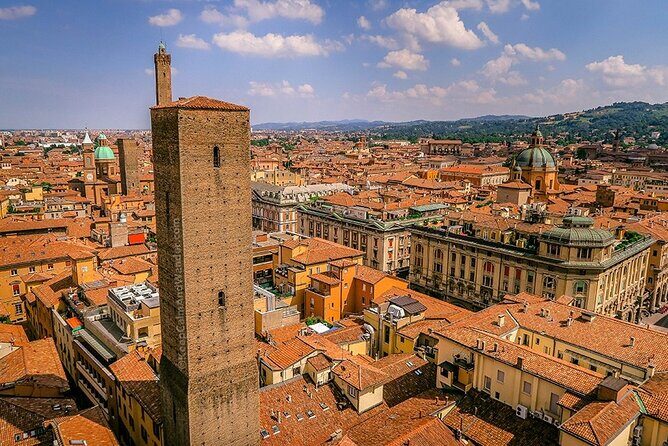
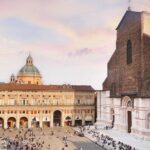
If you only do one walking zone in Bologna, start here. Piazza Maggiore is where the city’s power shows up in architecture, civic buildings, and symbolic art. Even if you arrive with jet-lag eyes, this is the place where the streets start to make sense.
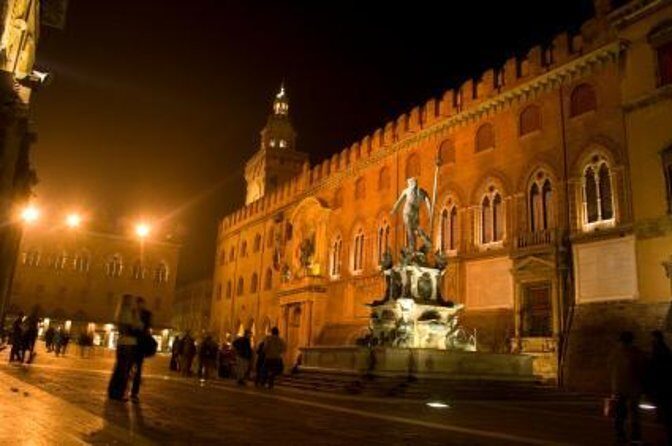
Your guide begins in the square the Bolognese simply call the Piazza, and you’ll hear its broader identity linked to Lucio Dalla’s nickname, Piazza Grande. Then the tour pivots to Bologna’s best-known sculptural statement: the Fountain of Neptune, known locally as Il Gigante. Neptune dominates the water, and that idea is tied to papal authority—so the “just a fountain” view doesn’t hold. You’ll also learn about the putti at Neptune’s feet, representing major rivers known at the time, which helps you read the whole scene like a message, not just a backdrop for photos.
Next comes Palazzo Re Enzo, built as an extension of the municipal buildings and later associated with King Enzo of Sardinia. The clever bit is that you’re not only hearing about dates and names—you’re also getting a sense of how space worked. War-related storage and council sessions were handled in different areas of the building, so the place explains civic order as much as it explains royal drama.
Why this start is valuable for you: Bologna has lots of old stone and lots of towers. This sequence gives context early, so later sights feel connected instead of random. If you like history that’s tied to what you can actually see in front of you, this part does the job.
Other private guided tours in Bologna

Palazzo d’Accursio: when city government feels like a castle
Right in the same Piazza complex, Palazzo d’Accursio (also tied to the Palazzo Comunale) is where Bologna’s civic heart shows its teeth. The guide frames it like an almost castle—big, layered, and built up over time. That phrasing matters, because it sets you up to notice the building as a living organism: joined parts, older cores, and centuries stacked together.
You’ll also get a practical architectural moment: the complex includes a staircase attributed to Bramante. Even if you’ve never studied Renaissance architecture, you’ll understand why people built grand approaches—this was about processions and showing power. Then the story shifts from politics to deep time. Inside, you can see ancient excavations and layers from different civilizations in one view, moving from Villanovan settlements to Etruscan Felsina and then Roman Bononia. It’s the kind of history that sounds abstract until someone points at what you’re actually looking at.
What to watch for: as you listen, keep your eyes moving. This tour works best if you treat buildings as texts: look at entrances, levels, and how spaces relate to the square.
Small-group advantage: with a cap of 10 travelers, you’re less likely to get shuffled into a line where you can’t ask one more question. That matters here, because the meaning of civic buildings isn’t obvious on first glance.
Basilica di San Petronio: the church that doesn’t play by cathedral rules
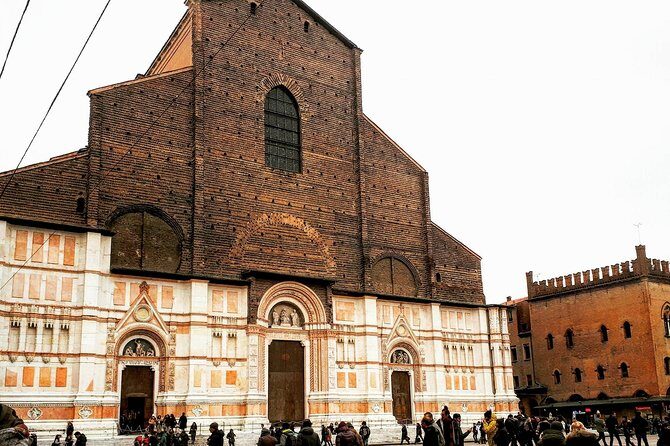
Next up is Basilica di San Petronio, Bologna’s major church—surprisingly not the cathedral. The guide helps you figure out why it doesn’t fit the usual expectation of what a cathedral should look like or how it should present itself. That’s a great setup for your visit, because it turns the exterior oddness into a reasoned story instead of a visual puzzle.
Inside, you’ll focus on the Bolognini Chapel, including the four crosses and the longest sundial in the world. This is one of those details that makes you slow down without being forced. A sundial isn’t just a cool object; it’s a window into how people measured time, ordered daily life, and used art to teach.
Note about audio and costs: the tour data says that the basilica stop has admission ticket not included, and for groups of more than two people you need to rent an audio guide at the entrance (not included in the tour price). So if you’re going with more than one person, budget time and money for that pickup.
Is the basilica stop worth it? If you like churches for what they say about society—not just for paintings and stained glass—you’ll enjoy this. It’s not a quick glance. The guide points you toward the features that connect to belief, timekeeping, and local identity.
Archiginnasio: university life, coats of arms, and an anatomy theater vibe
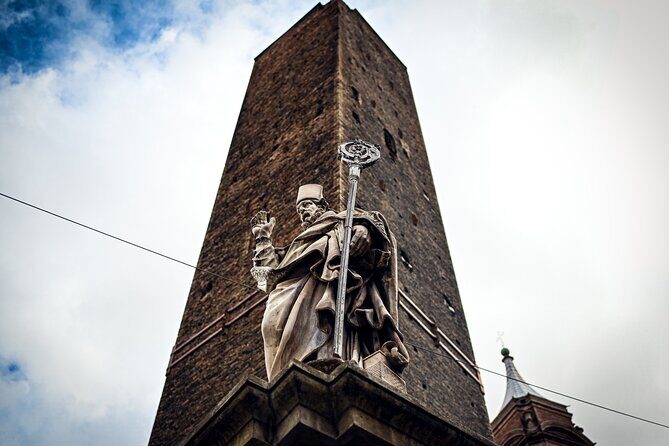
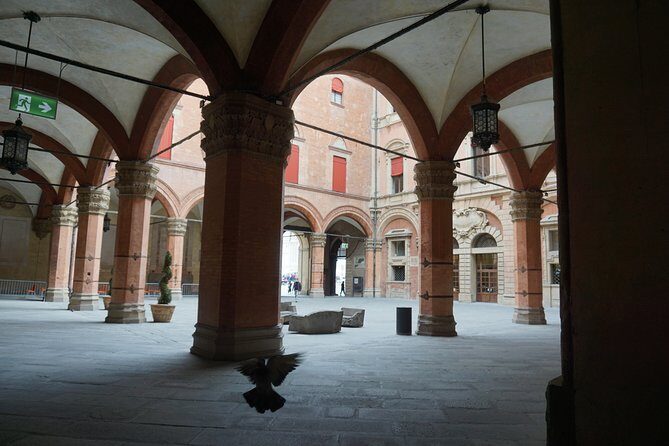
After San Petronio, the tour heads to Archiginnasio, the historic home of the University of Bologna for three centuries. This is one reason Bologna feels different from many other Italian cities: education isn’t a side story here. It’s part of the city’s bones.
The guide emphasizes what makes Archiginnasio feel like a time machine. You’ll see heraldic coats of arms, illuminated manuscripts, and ancient books. There are also stands and wooden statues tied to the anatomical theater. That combination matters. It’s not just a museum of objects. It’s a reminder that learning once had a public, theatrical role—and that scientific study sat in the same cultural orbit as symbols and ceremony.
If you’re a first-time Bologna visitor, this stop is a strong anchor. Most cities sell you cathedrals and art. Bologna adds a different angle: how a town builds institutions and then lives inside them for centuries.
One practical thought: this is an interior stop, so it can be cooler than the street, but it can also mean you’re standing for parts. If you’re planning other museum-heavy days, you might use this tour as your university primer, then go deeper on your own afterward.
Via Pescherie Vecchie: medieval market lanes and a place to eat without fuss
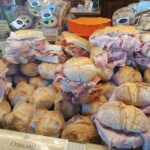
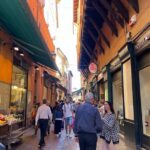
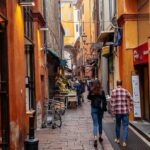
Then comes one of the most fun parts: Via Pescherie Vecchie. This is Bologna’s ancient central market area, with a history as a main trading center from the Middle Ages. Today it’s a maze of historic shops—small lanes that feel like they’re made for wandering, not navigating.
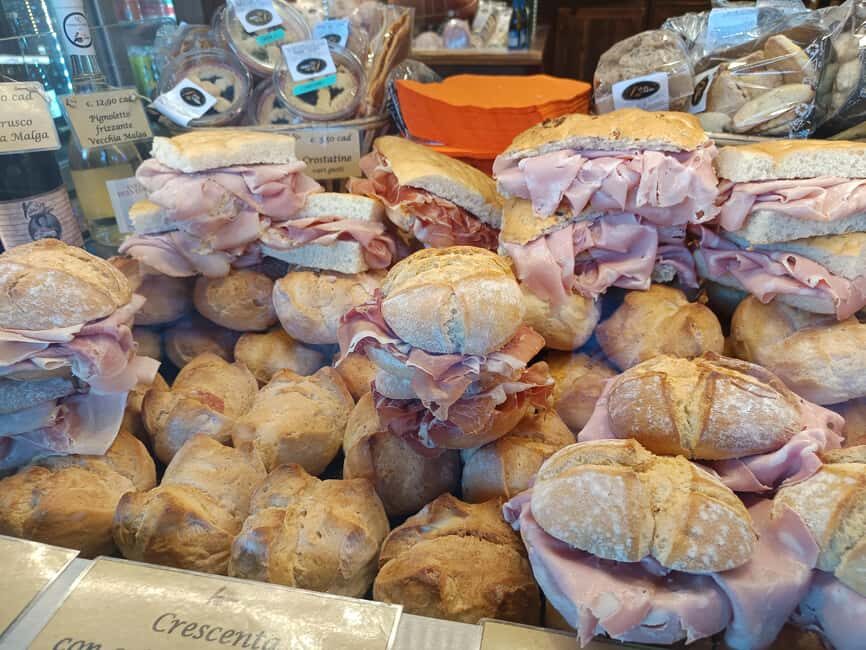
The guide frames it as more than scenery. It’s where you can pick up something simple: a glass of wine or street food. Snacks aren’t included on the tour, but this stop makes it easy to grab something without having to plan an extra detour around your guide’s schedule.
Why this matters for you: Walking tours can sometimes turn into constant “look but don’t eat.” Here, the market lanes give you a natural moment to do what you actually want to do on a travel day—taste the city.
Time reality: the tour data lists this as about 15 minutes. That’s enough to orient you in the area and point you toward good options, but not enough for a long sit-down meal. If you want a proper dinner, save it for later.
Other historic centre and hidden gems tours in Bologna
Small group, English guide, and what your ticket buys
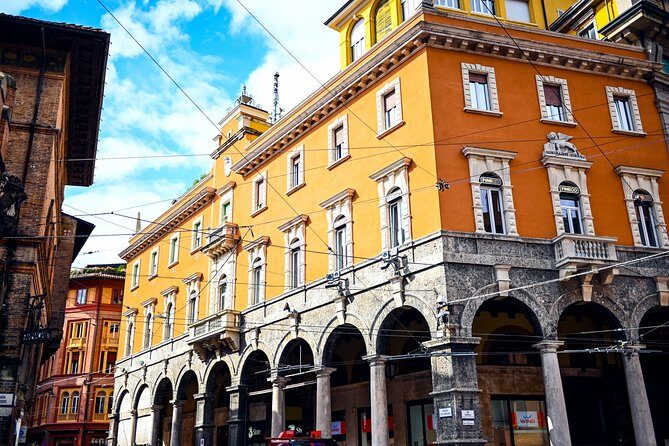
At $132.15 per person for about two hours, this isn’t the cheapest walking option in Italy. So I’d look at the value like this: you’re paying for a licensed guide, a route that strings together multiple “big ticket” stops, and a small-group experience capped at 10.
You’ll also get a mobile ticket and group discounts. That’s practical if you prefer not to juggle paper. Plus, the tour includes RC insurance, which is a quiet but reassuring detail when you’re trusting someone with your time in a busy central zone.
English is offered, which is helpful if you want the details without relying on translation apps for everything. One thing to consider: one past guest noted the guide’s English was decent but not 100% fluent. For most people, that won’t be a deal-breaker, and the same guest said it didn’t detract from the tour. Still, if you’re extremely sensitive to language nuance, it’s worth keeping your expectations grounded.
The big theme throughout: the guide doesn’t just list monuments. You’ll get context—why Neptune is tied to papal power, how civic buildings operated in the medieval world, and why San Petronio has that unusual relationship to the cathedral idea.
If you want a relaxing first-day walk: this fits. It’s light walking, focused on highlights, and designed to avoid the frustration of following a map line-by-line.
Practical details so the walk stays easy

Here’s what helps make this smoother on your feet and in your schedule:
- Meet at Libreria Giannino Stoppani, Via Rizzoli 1/f. The tour ends back at the meeting point.
- Expect light walking. Most travelers can participate.
- Keep weather in mind. The tour requires good weather; if it’s canceled for poor weather, you’re offered a different date or a full refund.
- Public transit is nearby. So you can use transit to get to the start without a car.
- Plan for optional extras. Audio guides at San Petronio are not included, and snacks aren’t included for the market area.
Also, the tour is often booked far in advance (the data says on average 130 days ahead). That’s a sign to secure your spot early if your dates are fixed.
Should you book this Bologna historic center tour?
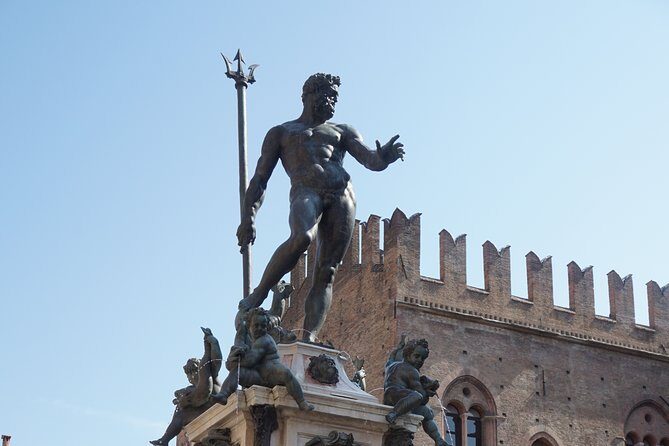
I’d book it if you want the best-hit highlights of Bologna’s historic core in a short time, with context that makes the city feel connected. The Piazza Maggiore sequence—Neptune, Palazzo Re Enzo, and Palazzo d’Accursio—sets you up to understand why Bologna looks the way it does. Adding San Petronio and Archiginnasio gives you two deeper layers: sacred space and university-era learning. Then Via Pescherie Vecchie finishes on a practical note, with a natural chance to eat and drink.
I’d think twice if you’re hoping for lots of unhurried interior time at every stop. This is a walking highlights tour, not a slow museum day. And if you’re traveling with more than two people, remember the audio guide requirement at San Petronio may add a small extra cost and a bit of time.
FAQ
How long is the tour?
The tour is approximately 2 hours.
How much does it cost per person?
The price is $132.15 per person.
Is it a private tour?
It’s described as private or semi-private.
What language is the tour offered in?
It’s offered in English.
What group size should I expect?
The maximum group size is 10 travelers.
Where do we meet and where does the tour end?
You start at Libreria Giannino Stoppani, Via Rizzoli 1/f, 40125 Bologna, Italy, and it ends back at the meeting point.
What’s included in the tour price?
The tour includes a guided walking tour with a licensed guide and RC insurance.
Is an audio guide included for San Petronio?
No. For groups of more than 2 people, you need to rent an audio guide at the entrance of the basilica, and it is not included in the cost of the tour. The basilica stop also lists admission ticket not included.
Is there much walking?
It involves light walking.
What if there’s bad weather or you need to cancel?
The tour requires good weather. If it’s canceled due to poor weather, you’ll be offered a different date or a full refund. You can cancel for a full refund up to 24 hours in advance.
Should You Bring a Service Animal?
Service animals are allowed.