REVIEW · BOLOGNA
Bologna: Private Top Historical Sites Guided Walking Tour
Book on GetYourGuide →Operated by TUI Musement · Bookable on GetYourGuide
Bologna is the kind of city that rewards slow attention. This private walking tour strings together Piazza Maggiore, Gothic churches, and the market streets, then ends at Santo Stefano, the Seven Churches complex. I especially like how the route connects civic power (palaces and fountains) with everyday life (food shops in Mercato di Mezzo).
You’ll also get a smart, structured look at major landmarks like Basilica of San Petronio and the Archiginnasio area via the Portico del Pavaglione. One consideration: it’s a walking tour and it isn’t suitable for people with mobility impairments, plus you can’t bring luggage or large bags.
In This Review
- Key things you’ll notice on this Bologna private tour
- Meeting at Biblioteca Salaborsa and walking with a real plan
- Piazza Maggiore: the medieval heart you’ll keep seeing in your photos
- Fountain of Neptune and the art of Bologna’s public space
- Civic palaces: Palazzo Re Enzo, Notai, and Banchi in quick, meaningful passes
- The Two Towers of Bologna: skyline icons with a medieval backstory
- Inside San Petronio: Gothic scale, the Cassini sun-dial, and Cappella Bolognini
- Portico del Pavaglione: walking under history (and shopping streets)
- Mercato di Mezzo: understanding Bologna through the market streets
- Piazza Santo Stefano: The Seven Churches in a calm, compact finish
- Languages, pace, and private-group comfort: why it feels easier than standard tours
- Price: what you’re paying for (and what you might add)
- Weather and practical realities: what to pack for a 2-hour walk
- Who this Bologna walking tour is best for
- Should you book this private Top Historical Sites guided walking tour?
- FAQ
- Where does the tour start and end?
- How long is the Bologna private historical sites walking tour?
- What sights are included in the walking route?
- Are there any entrance fees you should expect?
- What languages are available for the live guide?
- Is the tour private or shared?
- Is the tour suitable for people with mobility impairments?
- Is luggage allowed?
- What happens if it rains?
Key things you’ll notice on this Bologna private tour
- Piazza Maggiore’s civic palaces in a tight, 2-hour route that helps you “see the city’s rules” at a glance
- San Petronio’s Gothic design, including the Cappella Bolognini frescoes and Cassini’s famous sun-dial inside
- Portico del Pavaglione as a real-life corridor linking shops, history, and the university story at Archiginnasio
- Mercato di Mezzo food-shop streets where the market energy explains how Bologna eats as well as what it has
- Santo Stefano’s Seven Churches in Piazza Santo Stefano, bringing the medieval mood to a quiet finish
Meeting at Biblioteca Salaborsa and walking with a real plan
The tour starts with you meeting your guide at Biblioteca Salaborsa (your guide holds a TUI sign/flag). From there, you’ll get pulled into the old center quickly, without wasting time figuring out where to go next. The experience is private, so the pace and questions are more flexible than on a big-group tour.
This is also one of those tours where the “how” matters. With only 2 hours, the guide is doing the heavy lifting—choosing stops that make sense together and explaining how Bologna’s medieval layout still shapes your walk today. The trade-off is that you won’t have hours at each place, so it’s best for travelers who want a strong overview and a few memorable moments inside.
Other private guided tours in Bologna

Piazza Maggiore: the medieval heart you’ll keep seeing in your photos
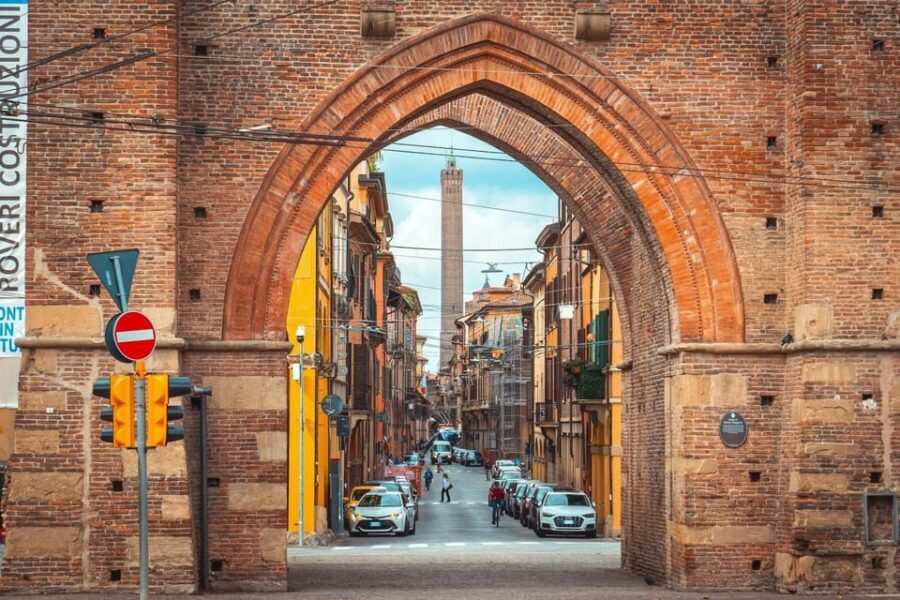
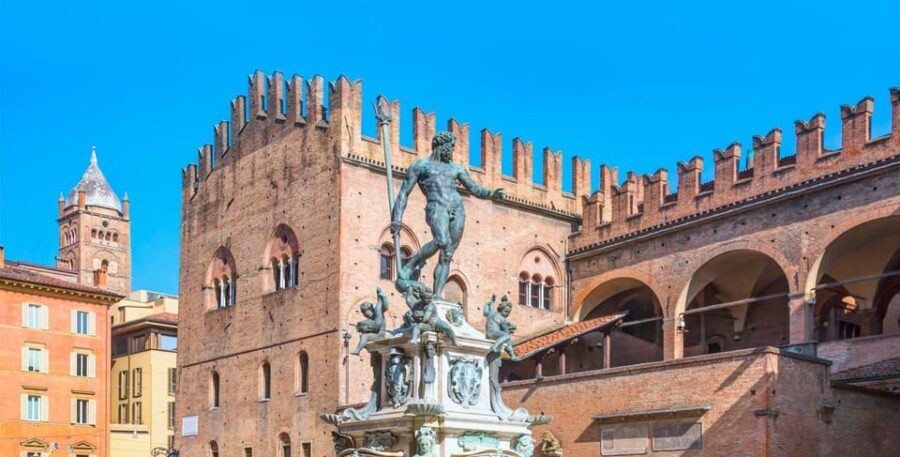
The main action begins at Piazza Maggiore, Bologna’s core. Here, you’re surrounded by the kind of civic architecture that turns a square into a statement about power and identity. You’ll also pass the skyline landmarks that define the city’s medieval character, setting you up for the story the rest of the tour tells.
What I like about starting here is that it gives you an anchor. Once you understand what Piazza Maggiore represents—government, wealth, and public life—everything later makes more sense. And if you’re the type who enjoys details, your guide points out the points that explain why specific buildings matter, not just that they exist.
Fountain of Neptune and the art of Bologna’s public space
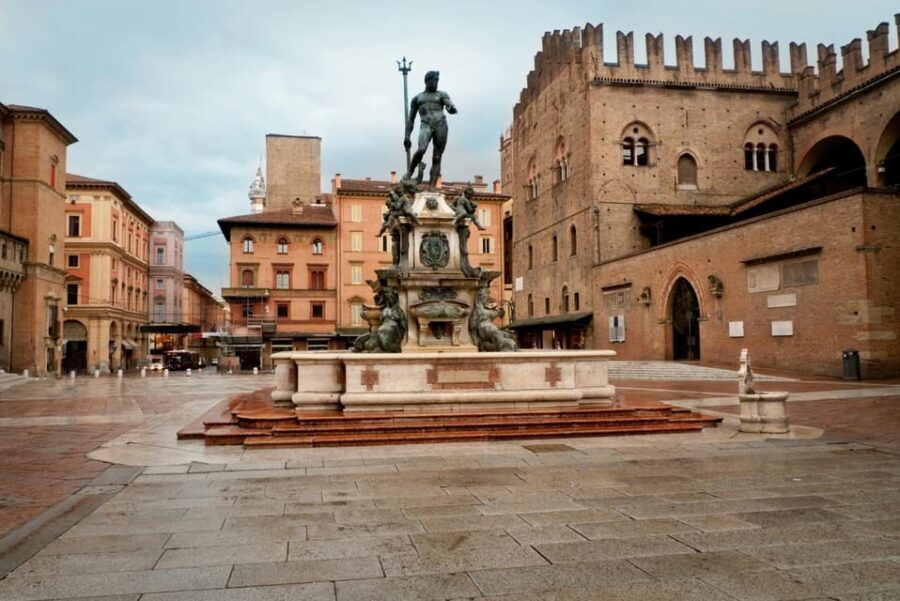
At the Fountain of Neptune, you get one of those moments where Bologna shows off without needing to say much. This fountain is decorated with late Renaissance sculptures by Giambologna, and seeing it in person helps you understand why art and civic pride were often linked in city design.
It’s a good stop for a quick reset. After the palaces and the open space of Piazza Maggiore, the fountain gives your eyes something focused. You’ll also learn the kind of context that makes the sculpture feel less like decoration and more like communication.
Practical note: fountains and squares mean you’ll be standing and looking for a bit, so if you’re sensitive to time in the open, plan to wear comfortable shoes right away.
Civic palaces: Palazzo Re Enzo, Notai, and Banchi in quick, meaningful passes
As you move through the center, you’ll see major medieval palaces around the square and nearby streets:
- Palazzo Re Enzo
- Palazzo dei Notai
- Palazzo dei Banchi
Even when you’re just passing by, the guide’s commentary matters because these buildings weren’t simply “nice architecture.” They reflect Bologna’s institutions—legal life, business activity, and the civic identity that made the city influential. The benefit for you: you’ll start to read facades like clues instead of treating them as scenery.
One quick consideration: because some stops are pass-by, the best experience comes when you’re ready to look up. If you mostly keep your eyes on street level, you may miss some of what makes the palaces special.
The Two Towers of Bologna: skyline icons with a medieval backstory
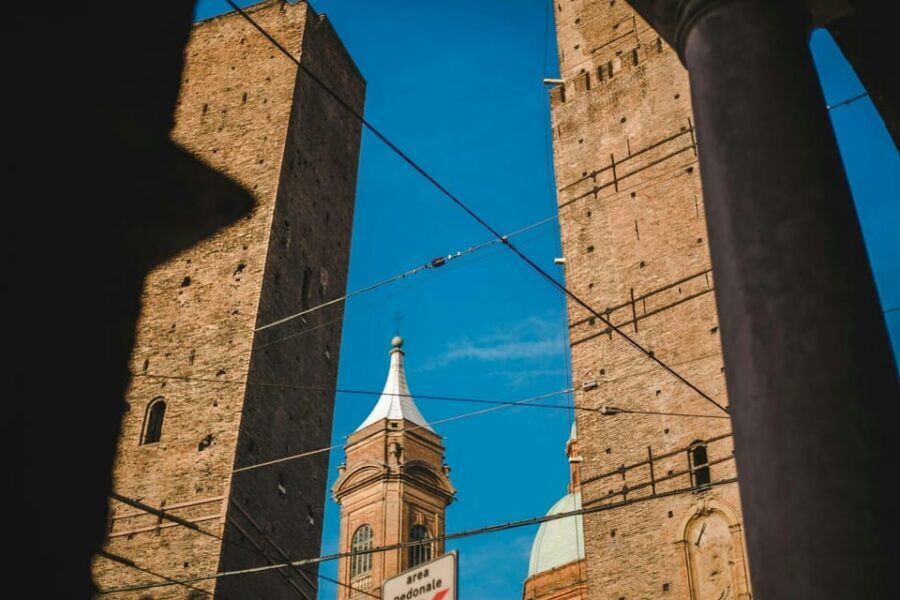
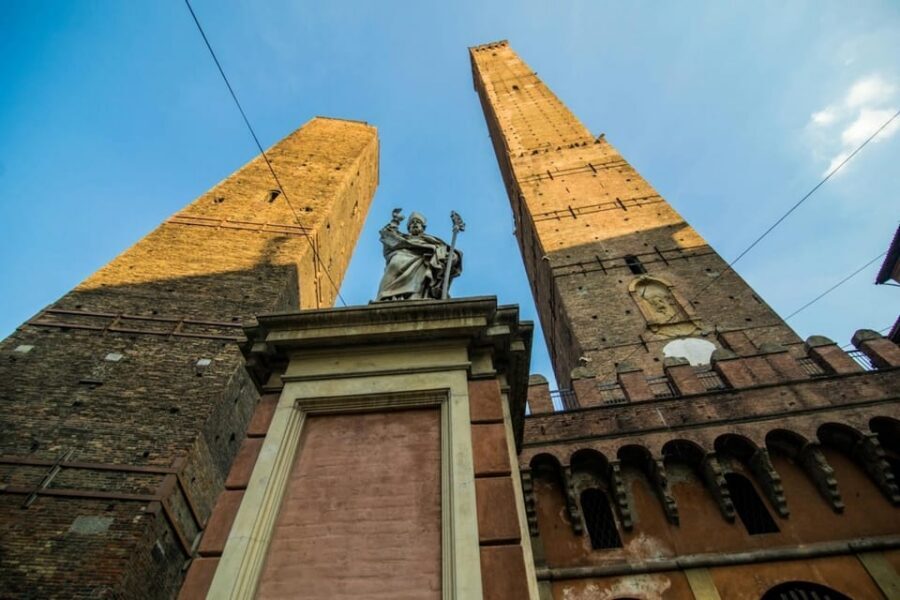
The Two Towers are part of Bologna’s signature look, and you’ll get them as a pass-by moment. They’re not just “tall buildings”—they’re a visual shorthand for how families and civic dynamics shaped the medieval skyline.
Even if you only get a short moment with them, it’s still useful. Once you know they’re part of a larger power-and-status story, they stop being random towers and start being a map marker for what Bologna used to be like.
Other historic centre and hidden gems tours in Bologna

Inside San Petronio: Gothic scale, the Cassini sun-dial, and Cappella Bolognini
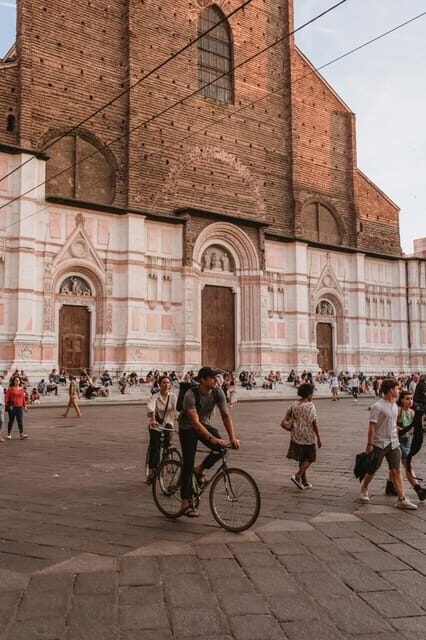
Now for the anchor stop: Basilica of San Petronio. This is one of the city’s most impressive Gothic landmarks, and the tour includes time for a guided visit so you’re not just looking at the exterior.
Inside, you’ll focus on details such as:
- the Cappella Bolognini with late Gothic frescoes
- the grand sun-dial designed by astronomer Cassini
For me, this is where the tour earns its ticket. Religious spaces in Italy often mix faith with art, science, and politics, and San Petronio does that in a very tangible way. The Cassini sun-dial is especially memorable because it turns the church into a place where observation and measurement mattered—not just devotion.
What to watch for as you go in: the church is big, and the guide will help you find the specific points they’re highlighting. If you go quiet and let your attention follow their direction, you’ll get far more than if you try to spot everything alone.
Portico del Pavaglione: walking under history (and shopping streets)
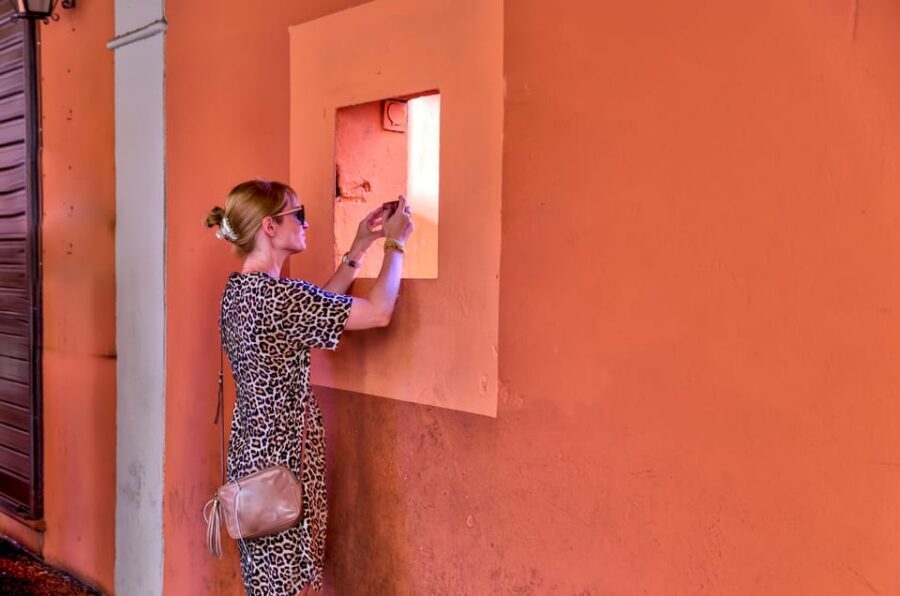
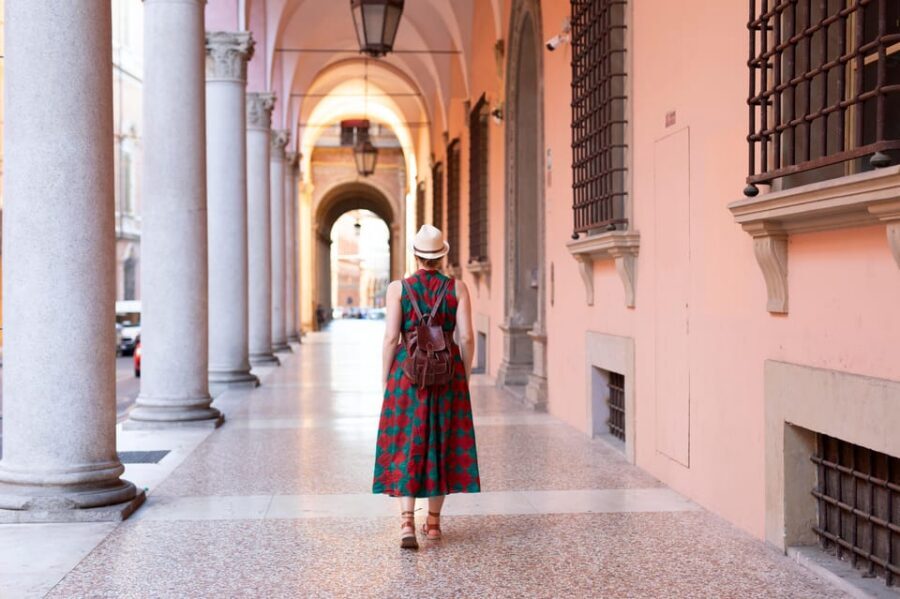
Next you’ll head along the Portico del Pavaglione. This is one of those Bologna experiences that feels ordinary until you realize it’s also architectural design. You walk under arcades, pass shopfronts, and see how the city’s walkability and buildings blend into daily life.
The guide also ties this area to education by bringing you toward Archiginnasio Palace, Bologna’s former university building. You may see the famous student coat-of-arms theme described as nearly 6,000 coats of arms, which shows how identity and learning were recorded publicly.
Important practical point: the tour notes that Archiginnasio site entry isn’t included. If you want to go inside, plan for an extra €3.50 per person entrance fee.
If you like history that explains how a city works, this is a smart stop. It’s not only a “pretty corridor”—it’s the framework that helped Bologna function day to day.
Mercato di Mezzo: understanding Bologna through the market streets
Then comes Mercato di Mezzo, Bologna’s historic market district. This part works differently than the big landmark stops. You’re in smaller streets and shopfronts where the atmosphere is tied to what people buy and eat.
The tour’s value here is that your guide connects food-shop culture to the city’s identity. You’ll notice the scents, colors, and variety of traditional shop life more clearly because you’re walking with context. Even if you don’t plan to eat during the tour, you’ll leave understanding why Bologna’s food reputation isn’t random.
One consideration: markets can be busy with people and stalls, and you’ll be walking through close quarters. If you prefer lots of personal space, keep that in mind—and wear something you don’t mind getting a little close to foot traffic.
Piazza Santo Stefano: The Seven Churches in a calm, compact finish
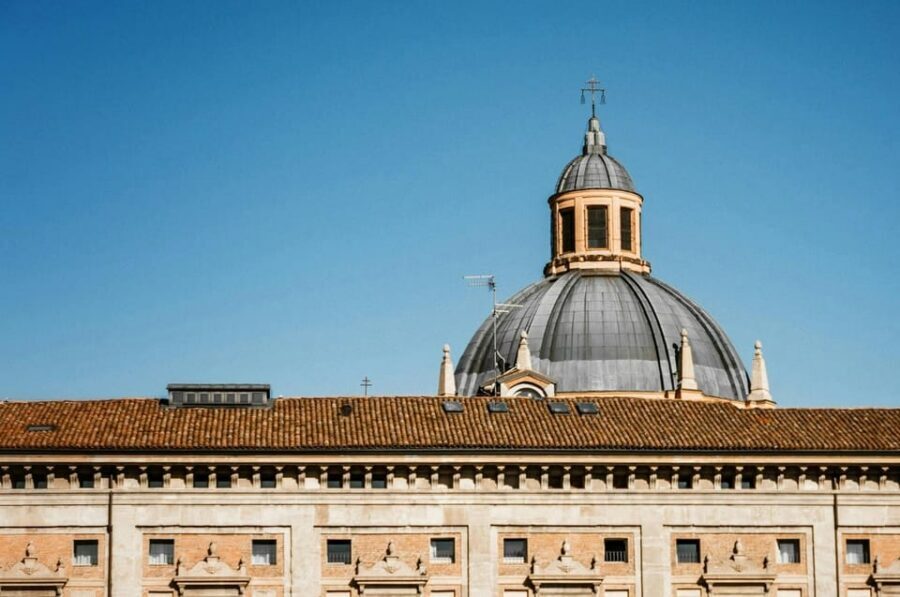
The tour ends in Piazza Santo Stefano, where the Santo Stefano complex sits. This area is often associated with the “Seven Churches” idea, described as the Jerusalem of Bologna. The feeling here is a change of pace from the larger civic squares: more quiet, more focused, more architectural.
Your guide includes a guided visit, so you’re not just wandering through church fronts. This is the kind of stop where having someone explain what you’re seeing makes a difference. Romanesque church clusters can blur together if you’re moving fast and skipping the story.
Why I think this ending works well: the tour starts with civic power and public art, then closes with religious architecture and a more reflective atmosphere. It’s a simple rhythm, and it makes the whole route feel intentional instead of random “hit list” sightseeing.
Languages, pace, and private-group comfort: why it feels easier than standard tours
Your guide speaks Spanish, English, French, German, or Italian, and the group is private. That matters because you can ask follow-up questions without waiting your turn, and you can shift your pace slightly if you want more time on one stop (within reason).
There’s also a quality signal in the tour’s language performance. One standout comment I noted: a guide with very strong German. If you’re choosing this tour in German, English, French, or Italian, you’re picking an experience designed to support real communication—not just a rushed overview.
Remember: it’s still a walking tour. With 2 hours, your success depends on comfortable shoes and a willingness to keep moving. It’s not a “sit down and view” style experience.
Price: what you’re paying for (and what you might add)
At $147.27 per person for a 2-hour private tour, the cost isn’t low. But you’re not paying for a generic city walk. You’re paying for:
- a guide actively explaining several major sights
- a private format that makes questions and pace easier
- a tightly connected route through the medieval core
The only clear extra cost flagged is Archiginnasio entrance (€3.50 per person) if you want to add it. Everything else is included as a walking tour with guiding.
So, is it good value? For travelers who want a focused, well-told route through Bologna’s top medieval highlights—especially if you’re traveling with a small group or want your own pace—it’s often worth it. If you’re a solo traveler on a tight budget, you might compare against group tours, but you’d be trading away the private flexibility.
Weather and practical realities: what to pack for a 2-hour walk
The tour runs even when it’s raining. Cancellation only happens in exceptionally heavy rain, and you’d get a full refund in that case.
Given the “always walking” nature, pack smart:
- Wear shoes that handle wet pavement.
- Bring a light layer and rain protection you’ll actually use.
- Skip large bags or luggage—this tour explicitly doesn’t allow luggage or large bags.
Also, note it is not suitable for people with mobility impairments, which likely means the route has stretches that aren’t easy to navigate.
Who this Bologna walking tour is best for
I’d point you toward this tour if you:
- want a 2-hour high-impact introduction to Bologna’s medieval and Gothic landmarks
- care about how civic buildings, churches, and markets connect into one city story
- prefer a private format with a live guide in your language
It’s less ideal if you:
- need an accessibility-friendly route (the tour isn’t suitable for mobility impairments)
- want lots of museum time or long entrances (your church visits are guided, but the overall window is still just 2 hours)
- travel with heavy luggage (not allowed)
Should you book this private Top Historical Sites guided walking tour?
If you want Bologna in a smart, guided sequence—starting at Piazza Maggiore, getting real time at San Petronio, passing key medieval palaces, walking through Mercato di Mezzo, and finishing at Santo Stefano—this is a solid choice. The private format makes it feel smoother and more personal, and the route is built around the sights you’ll actually remember.
If you’re deciding purely on price, know you’re paying for the guide and the private pacing, not just for the landmarks. For many travelers, that’s exactly what turns a “see-it-once” walk into a story you carry home.
FAQ
Where does the tour start and end?
You meet your guide in front of Biblioteca Salaborsa (your guide holds a TUI sign/flag). The tour ends back at the meeting point.
How long is the Bologna private historical sites walking tour?
It lasts 2 hours.
What sights are included in the walking route?
The tour includes Piazza Maggiore, Basilica of San Petronio, Portico del Pavaglione, Mercato di Mezzo, and Piazza Santo Stefano (the Santo Stefano complex). It also passes by places like the Two Towers and the palaces of Re Enzo, Notai, and Banchi, plus a guided stop at the Fountain of Neptune.
Are there any entrance fees you should expect?
Archiginnasio site entry is not included, and the fee is €3.50 per person.
What languages are available for the live guide?
The live guide is available in Spanish, English, French, German, and Italian.
Is the tour private or shared?
It’s a private group tour.
Is the tour suitable for people with mobility impairments?
No. It is not suitable for people with mobility impairments.
Is luggage allowed?
No. Luggage or large bags are not allowed.
What happens if it rains?
The tour takes place even when it rains. If there is exceptionally heavy rain, it may be cancelled and you’ll receive a full refund.