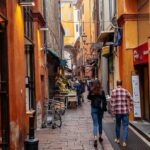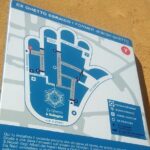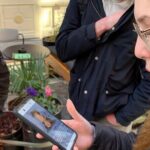
Bologna gets a brainy scavenger twist. The Bologna Secrets Quest is a self-guided game where you solve puzzles at real city sights, and it works as an offline app, so you are not stuck hunting for Wi‑Fi. You can also start and stop on your schedule, take breaks, then pick up again without feeling rushed.
What I like most is how it turns sightseeing into something you can actually control. You get 14 puzzle-based challenges tied to an engaging mystery storyline, and it is built for families and friends who want an active way to learn while they walk. The pace feels easy because you are not managing a group pace or waiting on anyone.
One caution: you are depending on your phone and the app working smoothly. Some people reported trouble downloading or unlocking the experience, plus occasional map-link mismatches, so I suggest you test everything before you commit your time outdoors. And if you hit construction on the route, you may spend extra time rerouting.
In This Review
- Key points before you go
- What you’re really buying: a 90-minute Bologna walk-game
- Price and value: $6.60 per person can be a good deal
- Offline app play and practical phone advice
- Stop 1: Piazza di Porta Ravegnana and the Two Towers area
- Stop 2: Palazzo Isolani and the Piazza Santo Stefano complex
- Stop 3: Piazza Galvani and the silk-market to university shift
- Stop 4: The Quadrilateral market lanes with medieval “holes”
- Stop 5: Neptune’s Fountain and the Giambologna connection
- Stop 6: Porta Nova (Torresotto) and Bologna’s wall rings
- Stop 7: Torre Prendiparte, red brick, and a defensive look
- Stop 8: Piazza Giuseppe Verdi and the student-life ending
- Who should book this quest?
- Should you book the Bologna Secrets Quest?
- FAQ
- How long is the Bologna Secrets Quest?
- What does it cost?
- Do I need internet to play?
- Do I need a physical tour guide?
- Where do I start and where do I finish?
- Is it offered in English?
- How many challenges are included?
- Can I cancel for a full refund?
- What should I do if I can’t download or unlock the app?
Key points before you go
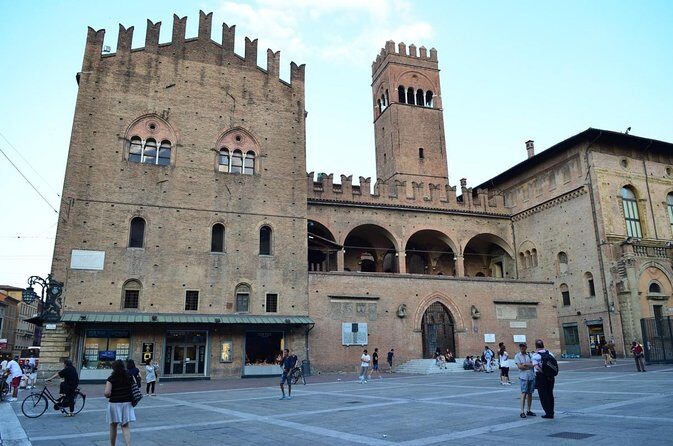
- Offline play: the quest does not require an internet connection to function.
- 14 challenges, real stops: each area asks you to look around and answer a question on the spot.
- Flexible timing: begin and end on your schedule, with pause and resume anytime.
- Works for groups and families: designed for shared discovery without a physical guide.
- A street-level lesson in Bologna: porticoes, towers, fountains, walls, markets, and student-life squares all show up.
What you’re really buying: a 90-minute Bologna walk-game
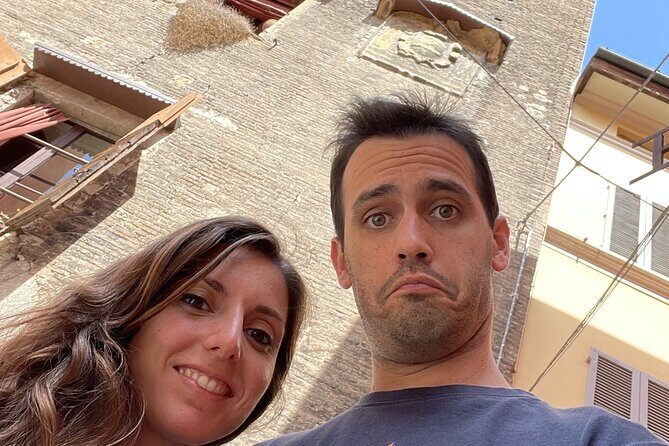
This is not a scripted guided tour. It is a self-guided quest that gets you moving through central Bologna, one short stop at a time, and it asks you to pay attention in a way normal sightseeing rarely does.
You will follow a route that starts near the Two Towers area and ends on a different street in the city center. At each stop, you use the app to read the prompt, then look around nearby to find the answer. Admission at each listed stop is marked free, which matters because you can spend your money on the quest itself and keep the rest of your costs predictable.
The storyline is built around Bologna’s mysteries, and the format is puzzle-based. That means you are not just reading plaques. You are turning the street scene into clues. If you like the feeling of solving a riddle while you walk, this matches that instinct.
Other historic centre and hidden gems tours in Bologna

Price and value: $6.60 per person can be a good deal
At $6.60 per person, you are paying for a low-cost way to explore multiple major and minor sights in a compact time window (about 1 hour 30 minutes). It also includes mobile access via a code and a mobile ticket, so you are not dealing with printed documents.
Value comes from two things. First, it bundles a lot of learning into the time you are already spending on foot. Second, it gives you built-in structure. Bologna can be gorgeous but slightly overwhelming; this quest helps you focus on what to look for next.
One more value angle: it is offered with group discounts, and it is also listed as private for your group. So if you are visiting with kids, a small group of friends, or another pair of adults, you can keep the experience together without a stranger’s pace taking over.
Offline app play and practical phone advice
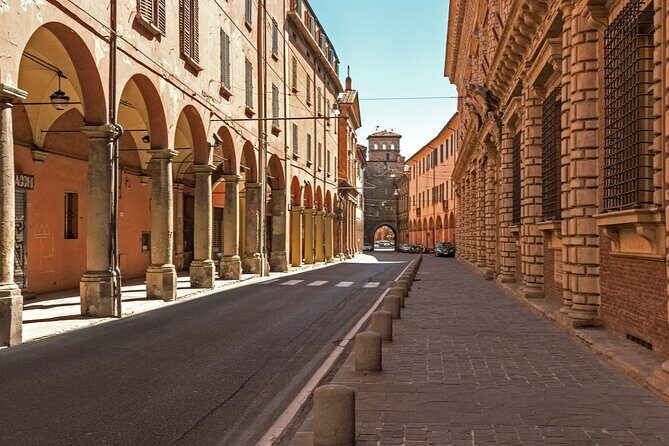
The quest is app-based and designed to work without internet connection while you play. That is ideal in Bologna, where you might be bouncing between busy plazas, narrow lanes, and covered porticoes.
Still, here is the practical part. Your experience relies on your phone. You will need the mobile access code for the quest, and you must have the app ready to go. Based on real user issues, the biggest risk is technical: one group couldn’t connect enough to download and unlock the experience at all, and another had a map link issue that caused the clues not to match the location.
So do this simple check before you start walking:
- Make sure you can open the app and see the quest content.
- If possible, download everything you need before you head out on your Bologna day.
- Bring a fully charged phone and a backup battery if you have one.
If you run into a problem, the provided support contact is [email protected]. Keep that handy.
Stop 1: Piazza di Porta Ravegnana and the Two Towers area
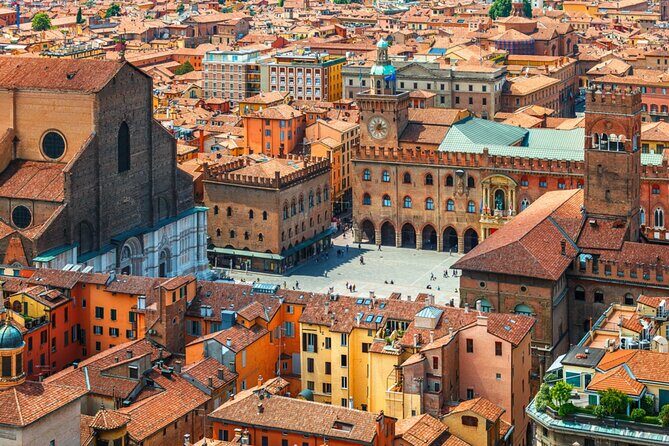
You begin at P.za di Porta Ravegnana, a central square that sits a few blocks east of Piazza Maggiore and the Cathedral of Bologna. The spot matters because it is tied to the Two Towers of Bologna, and the area is made for quick visual scanning.
At this first stop, the quest asks you to look around and find the answer to a challenge before you move on. That is a smart way to break the ice. You are not expected to memorize Bologna landmarks on day one—you are trained to notice details.
Practical tip: treat stop 1 like a warm-up. If the app prompt takes you a minute, that is normal. Once you get the rhythm—read clue, look around, answer—the rest of the route tends to feel smoother.
Stop 2: Palazzo Isolani and the Piazza Santo Stefano complex
Next you work around Palazzo Isolani on Via Santo Stefano, facing Piazza Santo Stefano. This palace blends Gothic and Renaissance features, and it gives you a nice shift in visual style as you move.
The quest again uses the same mechanic: look around, find the answer, advance. What I like here is that it nudges you to notice architectural variety right away. A lot of Bologna sightseeing stays in one mode—towers and brick streets. This palace helps you see how different design languages sit in the same city pocket.
Then you reach Piazza Santo Stefano, a place known for cultural events, flea markets, and concerts. It has porticoes along both long sides, while the Basilica takes the short side of the square. Nearby is a complex of buildings associated with the powerful Isolani family.
Why this stop works: you learn Bologna’s “layout logic.” Porticoes shape the walk. Basilicas and palaces anchor the geometry. And the Isolani connection gives you a historical thread that makes the street feel like more than scenery.
Other self-guided audio tours in Bologna





Stop 3: Piazza Galvani and the silk-market to university shift
At Piazza Galvani, the story turns toward commerce and education. The space was dedicated to the silk market from the 15th to the 17th centuries, and then the larger university-related Palazzo dell’Archiginnasio begins construction from 1563.
What the quest has you do here is simple: look around and answer the clue so you can continue. But the context is what makes it interesting. You are in a place where the city’s priorities changed. First trade and manufacturing space. Then a major institutional building project that reshaped what was around it.
If you like cause-and-effect in cities, this stop gives it to you. Even if you do not know Bologna’s timeline, the clue route keeps you thinking about why squares become what they are.
Stop 4: The Quadrilateral market lanes with medieval “holes”
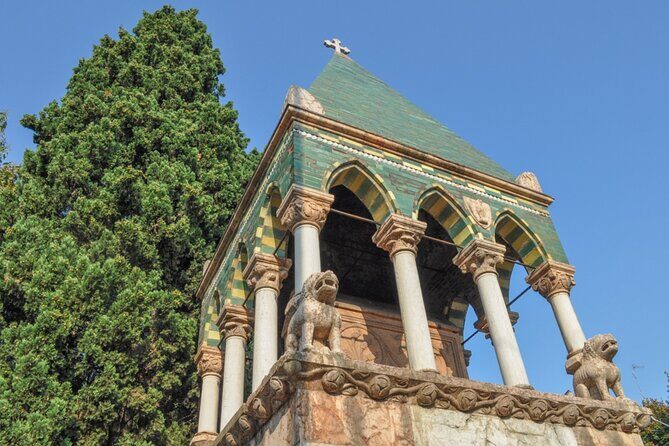
The Quadrilateral is where Bologna feels most like daily life. This area carries a craft and trading tradition reaching back to the Middle Ages, and you get to experience it by walking through narrow lanes rather than sticking to the biggest open squares.
The description highlights tall archways, a move away from Piazza Maggiore, and those famous narrow alley vibes. It also mentions the characteristic holes—openings or features that help define how light and street view work in these tight passageways. You will also see shops with specialized trades, often passed down through generations.
Here is the value for you: a quest like this turns a “nice shopping area” into a focused scavenger walk. You are paying attention to shop design, trade continuity, and even the mix of old and newer buildings that respect earlier plans.
Look out for the older pharmacy-style atmosphere too. The route notes that some historic chemist shops still keep that old-world feel. This is the kind of detail that makes Bologna stick in your memory after you leave.
Stop 5: Neptune’s Fountain and the Giambologna connection
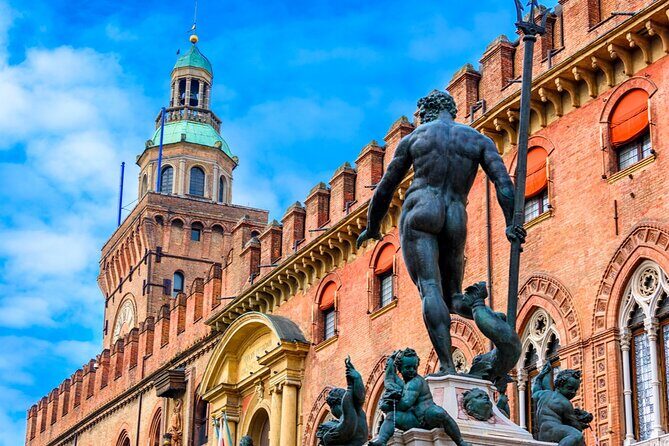
Then you move to Neptune’s Fountain, completed in 1565. The over-life-size bronze figure of Neptune was completed and fixed around 1567, and the design traces back to Giambologna. The route adds a fun art-history footnote: Giambologna had submitted a model for a Fountain of Neptune in Florence, but lost that commission to Baccio Bandinelli.
Even if you already recognize the fountain from photos, the quest format changes your experience. Instead of admiring and moving on, you are looking for something you can use as an answer at that specific point in the game.
This is also a great spot to slow down. Take a breath. Let the app tell you the prompt, then use that moment to really focus on the details—figures, placement, and how the fountain sits within its urban setting.
Stop 6: Porta Nova (Torresotto) and Bologna’s wall rings
The next clue zone ties into Bologna’s defensive past: the Torresotto, also called the Porta Nova gate. It belongs to the second ring of walls, the Torresotti ring, completed in 1192.
You are given very specific wall facts here: the ring was about 4 km long, had 16 gates and 2 posterns, and the walls were about 8 m high with brick merlons. The route also references three wall rings built over centuries, with the oldest made of local seleni-te stone.
This is a “textbook idea” made walkable. If you have ever tried to imagine how a medieval city worked, this kind of on-street stop helps your brain build the picture quickly. The quest clue makes you pause long enough to absorb what you are seeing.
If you want an extra tip: use this moment to check your bearings. Once you understand where gates and rings are, Bologna’s streets make more sense.
Stop 7: Torre Prendiparte, red brick, and a defensive look
Next up is Torre Prendiparte, also known as Coronata Tower. It was built in the 12th century by the guelph Prendiparte family for defense.
The clue area description emphasizes the classic Bologna building materials: the red, solid brick look and selenite blocks that make the tower seem like an “impregnable medieval fortress.”
The quest keeps it interactive: look around, find the answer, move forward. But the point of this stop for you is emotional as much as factual. Bologna towers and brick walls can feel similar if you only see them from far away. Up close, the texture and sturdiness come through.
If you are traveling with kids, this is a solid moment. Towers are easy to get excited about, and the game structure helps keep questions fun rather than educational lectures.
Stop 8: Piazza Giuseppe Verdi and the student-life ending
The final stretch lands at Piazza Giuseppe Verdi, halfway along Via Zamboni, Bologna’s student street. This square is described as a constant meeting point where students and social life mix daily.
The route also names La Scuderia Café as a hub, and it talks about the rhythm of the city’s social scene: concerts, markets, street performances, and club nights. Cheap beer and street parties are part of the vibe, and the key idea is overlap—layers of Italian society sharing the same space.
Why this ending works: it gives you a city-after-dark feeling without requiring you to actually stay up late. It is a natural place to decompress after puzzles and walking. You finish with an atmosphere that feels current, not only historic.
Also, the quest ends on Via Giuseppe Petroni, 37. That matters because you can plan your next move—dinner, gelato, or a transit connection—without guessing.
Who should book this quest?
I think this fits best if you want a walk that feels like a game, not a lecture. You’ll likely enjoy it if:
- You travel with kids or mixed-age groups who need movement built into the plan.
- You and your friends like solving small problems together.
- You want structure so your Bologna day does not turn into random aimless roaming.
- You prefer self-paced sightseeing where you can pause, take photos, and keep going.
It may be less ideal if you hate tech-based experiences or you rely on spotty phone service. Even though play is designed to be offline, the quest still needs the app to load and your phone to cooperate.
Also, one practical note from real-world experience: plan for a bit more walking than the short distance some people expect. If you are tight on time or have mobility limits, wear comfortable shoes and give yourself a slower start.
Should you book the Bologna Secrets Quest?
Yes, I’d book it if you want an affordable, self-guided way to see several central Bologna highlights while practicing attention to detail. At $6.60 per person, it is hard to beat as a value play for a roughly 90-minute outing—especially with offline app use and pause/resume flexibility.
But do not treat it like a guaranteed phone-free museum ticket. Test the app access before you begin, and if you notice map mismatches or clue issues due to construction, be patient and adapt. When it works, it turns the city into a playful puzzle walk through real places you can point to later.
If you want a structured Bologna experience without a guide, this is a strong option.
FAQ
How long is the Bologna Secrets Quest?
It is listed as about 1 hour 30 minutes.
What does it cost?
The price is $6.60 per person. Group discounts are also mentioned.
Do I need internet to play?
No. It is described as an app-based adventure that doesn’t require an internet connection to play.
Do I need a physical tour guide?
No. It is a self-guided quest with a mobile access code for the game. A physical guide is not included.
Where do I start and where do I finish?
You start at Two Towers, P.za di Porta Ravegnana, 40126 Bologna and end at Via Giuseppe Petroni, 37, 40126 Bologna.
Is it offered in English?
Yes, it is offered in English.
How many challenges are included?
The quest includes 14 puzzle-based challenges.
Can I cancel for a full refund?
Yes. It offers free cancellation, with a full refund if you cancel up to 24 hours in advance.
What should I do if I can’t download or unlock the app?
If you cannot access the quest, use the contact provided: [email protected]. One support response specifically points people to email that address with details.