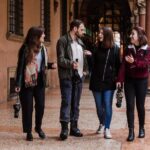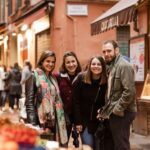
Bologna’s best stories start on the street. This 2.5-hour guided walk strings together the city’s most meaningful sights, with time inside major churches and a real local voice. You’ll see how Bologna mixes art, religion, and science in one compact route.
What I like most is the small group (max 8) and the way the guide explains what you’re looking at, not just where to stand. I also love that you get interior access at San Petronio and Santo Stefano, not only photos from the sidewalk.
One thing to plan for: you’ll be walking the whole time, and this route isn’t suitable for reduced mobility. Also, some sites can close for holy observances, so you may do a quick outside explanation if doors are shut.
In This Review
- Key Highlights You’ll Feel During the Walk
- Getting Oriented at Piazza del Nettuno (Neptune’s Fountain)
- Piazza Maggiore: Bologna’s Main Stage and Its Big Buildings
- Inside San Petronio: A Church So Big It Feels Like a World
- Archiginnasio: Where University Life Shaped the City
- Two Towers (Le Due Torri): Medieval Bologna in Two Shapes
- Santo Stefano’s Seven Churches: Quiet, Linked Spaces With a Strong Atmosphere
- Portici di Bologna: Why the Arcades Matter More Than a Photo
- The Guide Makes the Difference: Names, Styles, and Why It Matters
- Who This Tour Fits Best (And Who Should Skip It)
- Small-Group Comfort and Timed Entry: The Real-World Logistics
- Value Check: Why This Tour Feels Worth It
- Should You Book This Bologna Highlights Tour?
- FAQ
- How long is the Bologna Historical Highlights walking tour?
- Is the tour offered in English?
- What’s included in the tour besides the guide?
- Which stops have admission tickets included?
- Where does the tour start and end?
- What time should I arrive before the tour starts?
- Is this tour suitable for reduced mobility?
Key Highlights You’ll Feel During the Walk
- Neptune’s Fountain as your starting shot: right in the center of the city’s Renaissance symbolism
- San Petronio interior time: Gothic-meets-Renaissance scale plus the famous meridian line
- Archiginnasio without wasting time: a university courtyard visit that helps the whole city make sense
- The Two Towers stop: medieval power in the form of Asinelli and Garisenda
- Santo Stefano’s Seven Churches complex: quiet chapels and linked spaces that reward slow looking
- Porticoes walk-by value: you understand why these arcades matter and how people used them
Getting Oriented at Piazza del Nettuno (Neptune’s Fountain)
Most Bologna tours start you at a landmark. This one starts you at a landmark that actually teaches you how to read the city.
Neptune’s Fountain is hard to miss: a major Renaissance work centered on the Roman god of the sea. From here, your guide usually frames Bologna’s identity in a simple way—Bologna wasn’t only about beauty. It was also about power, learning, and civic pride. You’ll get that context before you reach the bigger squares.
Practical tip: Piazza del Nettuno can feel busy and crowded. If you’re arriving right on time, give yourself extra space to locate the group. One guide name that has come up is Maurizio—when he leads, his family ties to the city and his command of details help you get settled quickly once you’re with the group.
Other local guide experiences in Bologna



Piazza Maggiore: Bologna’s Main Stage and Its Big Buildings
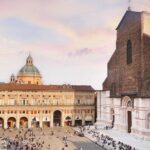
After the fountain, you move to Piazza Maggiore, the social and cultural heart of Bologna. This square is where the city’s “public life” is on display—architecture fronts the space, and you can see how civic identity plays out in stone.
You’ll also get your bearings for Basilica of San Petronio, which looms here as the next stop. Even if you don’t go inside yet, your guide’s explanation helps you understand why this square matters: it connects Bologna’s religious identity to its political and public space.
This is also a nice pace reset. The stop is short enough to keep momentum, but long enough for a few good looks and questions.
Inside San Petronio: A Church So Big It Feels Like a World
San Petronio is one of the largest churches in the world, and that size changes how you experience it. You’re not just stepping into a “nice church.” You’re entering a major monument that mixes styles and ideas.
You’ll get an interior visit with time to look around, and your guide will point out the architecture and artwork in a way that connects to Bologna’s intellectual life. One detail that gets special attention is the Meridian Line, tied to Bologna’s scientific heritage. It’s the kind of feature that makes the city click: religion and science weren’t separate topics here.
What to watch for:
- How the scale affects your sense of space
- Any visible artwork or design choices your guide highlights
- The meridian line feature—this is a strong payoff stop
Time note: the visit is about 20 minutes. It’s enough to take in the big moments if you stay present. If you tend to get photo-locked, remind yourself to also look up and around.
Archiginnasio: Where University Life Shaped the City
Next comes Archiginnasio di Bologna, tied to the University of Bologna, often described as the oldest university in the Western world. This is one of those stops where Bologna’s reputation for learning becomes tangible.
You’ll explore the inner courtyard, decorated with coats of arms. That visual language helps you understand that the university wasn’t just a school—it was part of Bologna’s social structure, with status and identity baked into the walls.
A guide name that has stood out for this stop is Andrea. His style is described as flexible—he adjusts based on what the group wants to learn—and his English (and sometimes Spanish) helps you follow the story without losing the thread.
Timing detail to plan around: the inner courtyard is not available for visits on Sundays. If your trip overlaps a Sunday, you may want to mentally budget for a slightly altered experience at this point.
Two Towers (Le Due Torri): Medieval Bologna in Two Shapes
Then you reach the iconic Two Towers: Torre degli Asinell and Garisenda. Bologna had more towers in the past, but these two remain as symbols of the city’s medieval heritage.
This stop works best if you treat it like a “then vs. now” lesson. Your guide’s explanations usually connect the towers to wealth and status—these weren’t casual structures. They were statements. As the city evolved, fewer towers survived, but the meaning stayed.
The views you might get here depend on where you stand, but the real value is understanding why these towers became “the” towers. You’re seeing a skyline symbol that tells you something about how Bologna’s neighborhoods used to operate.
It’s also a good moment to ask questions about what you’ve just seen in churches and universities. The towers help bridge the religious and scholarly story back to daily power.
Other historic centre and hidden gems tours in Bologna

Santo Stefano’s Seven Churches: Quiet, Linked Spaces With a Strong Atmosphere
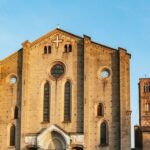
The tour ends (for the “major monuments” portion) at Basilica Santuario Santo Stefano – Complesso delle Sette Chiese. This complex feels different from the grand single-structure feel of some other churches. It’s interconnected chapels and corridors, so you move through space like you’re walking a story.
You’ll get an interior visit, with time around 30 minutes. This is where your guide’s pacing matters. If you rush, you’ll miss the “linked” feeling of the complex. If you slow down and look at the layout, it starts to make sense as a pilgrimage site—one that people visited for spiritual reasons over time.
What I like about this finish: it’s a calmer note after the big public landmarks. You’re still learning, but the environment encourages patience.
Practical detail: there can be occasional closures due to holy observances at sites along the way. If that happens, the guide will explain from outside. It’s not ideal, but it can keep the flow from turning into a disappointment spiral.
Portici di Bologna: Why the Arcades Matter More Than a Photo
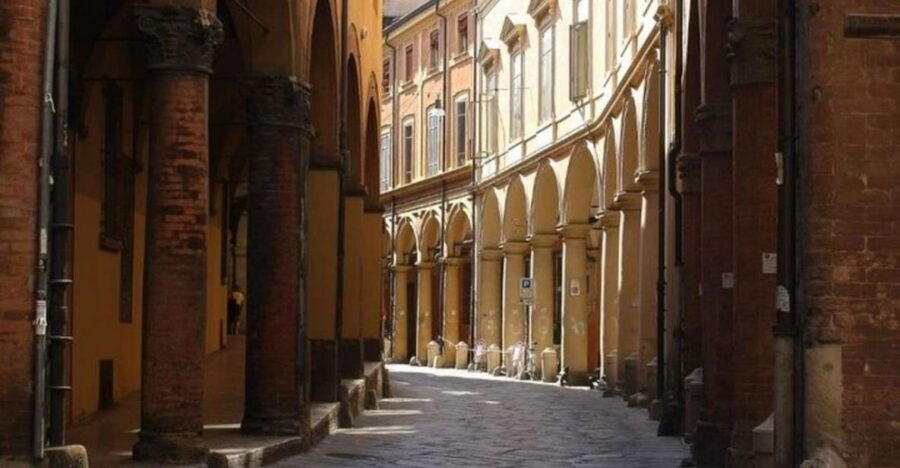
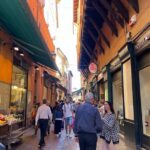
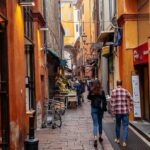
After the churches, you finish with a walk through the Portici di Bologna—Bologna’s famous porticoes. These arcades stretch for kilometers, and they’re a defining feature of the city skyline.
This is a stop that sounds simple until you learn the function. Porticoes are covered walkways. They protect people from weather, and they also create space for commerce. In other words, this wasn’t just decoration. It shaped daily life, street rhythm, and how people moved around the city.
You’ll walk enough to feel the rhythm without burning time. The payoff is that the porticoes stop looking like a quirky design detail and start looking like urban infrastructure.
The Guide Makes the Difference: Names, Styles, and Why It Matters
This tour’s success hinges on the local guide. With small groups of up to 8, you’re not shouting over a crowd—you can actually ask follow-up questions and hear answers that connect.
Two names that come up strongly are Maurizio and Andrea. Maurizio is described as having deep roots in Bologna and a PhD in medieval history, which is a fancy credential—but more importantly, it translates into clarity. You’ll hear a story that feels organized, not memorized.
Andrea is noted for adjusting to what the group wants and for a friendly, question-friendly approach. If you like your history guided by real explanations (not a script), this matters.
Who This Tour Fits Best (And Who Should Skip It)
This is a great choice if you want:
- A strong introduction to Bologna’s major sights without a long day
- Time inside big churches where details actually matter
- A guide who can connect art, architecture, and ideas into one flow
I wouldn’t pick this if:
- You need an accessibility-friendly route (it’s not suitable for reduced mobility)
- You hate walking for 2.5 hours at a city pace
- You’re traveling with large backpacks or bulky bags (those aren’t allowed in the monument areas)
If you’re traveling with kids, the tour can work because it’s structured and hits major landmarks. Just know you’ll still be walking continuously, with indoor time carved out at the right moments.
Small-Group Comfort and Timed Entry: The Real-World Logistics
Even though this sounds like a “just walk around” tour, the timed entry pieces make it smoother than many self-guided plans.
You’re set up with timed ticket entry for San Petronio and Santo Stefano interiors. That’s why you need to arrive at the meeting point 15 minutes early at Piazza del Nettuno. If you arrive late, you can’t just jump in midstream—there’s no joining after the tour begins.
Also keep in mind:
- Some sites can close for holy observances, and the guide may explain from outside
- The inner courtyard of Archiginnasio isn’t available on Sundays
- Respectful dress is requested for sacred sites
One more practical note: keep prohibited items in check. Sharp objects, glass bottles, and aerosols can be confiscated at monument entrances. If you show up prepared, you avoid that awkward delay at the door.
Value Check: Why This Tour Feels Worth It
There’s no cost number here, so I’ll judge value the way I would when planning: what you get for the time.
You get:
- 2.5 hours with an expert local guide
- Interior time at San Petronio (included) and Santo Stefano (included)
- A visit to Archiginnasio and the Two Towers plus a porticoes walk
Some other stops have free admission, but the real value is that the paid interior visits are built in. You’re not scrambling to line up tickets or guessing which moments deserve your full attention.
Add in the max 8 people format, and you’re getting more conversation per minute than you would on a larger group tour.
Should You Book This Bologna Highlights Tour?
Yes—if you want a guided route that hits the heart of Bologna with smart stop selection, and you care about meaning behind the sights. The mix of Neptune’s Fountain, Piazza Maggiore, San Petronio’s interior (with that meridian line), Archiginnasio’s university courtyard, the Two Towers, and Santo Stefano’s connected chapels gives you a Bologna “story” in one sitting.
Book it especially if you’re the type who likes asking questions and getting answers that go beyond dates. With guides like Maurizio or Andrea, the explanations tend to be the highlight, not an afterthought.
Skip it if walking nonstop is a dealbreaker, or if you know you’ll have trouble with monument entrance rules around bags and items. If that’s you, you’ll enjoy Bologna more with a slower, more flexible self-guided plan.
FAQ
How long is the Bologna Historical Highlights walking tour?
It runs for about 2 hours 30 minutes.
Is the tour offered in English?
Yes. The tour is offered in English.
What’s included in the tour besides the guide?
The tour includes a guided tour, interior visits of San Petronio Basilica and Santo Stefano, and an expert local guide for a small group of max 8 people.
Which stops have admission tickets included?
San Petronio Basilica and Santo Stefano (Seven Churches) include admission for the interior visits. Other listed stops are marked as free.
Where does the tour start and end?
It starts at Piazza del Nettuno, 40124 Bologna BO, Italy, and it ends back at the meeting point.
What time should I arrive before the tour starts?
You must arrive at the meeting point 15 minutes before start time, due to timed entry.
Is this tour suitable for reduced mobility?
No. The tour is not suitable for people with reduced mobility.