REVIEW · BOLOGNA
Bologna’s Ancient and Recent History: A Self-Guided Audio Tour
Book on Viator →Bookable on Viator
Bologna has a way of making time feel layered. This self-guided audio walk uses a local-style storyteller, award-winning author Frank Bures, to connect ancient Bologna to more recent history while you wander at your own speed. It’s also a good reminder that Bologna is more than pasta and towers, even if those are very good reasons to come.
What I like most is how simple it is to use once you’re there, and how the audio stays tied to what you’re actually looking at. Starting at Neptune’s Fountain, you’ll move through Piazza Maggiore, San Petronio Basilica, the Two Towers, the UNESCO-listed porticos, and a few science and culture sidetracks without needing a group schedule.
One thing to consider: this is not a museum tour with ticketed interiors or guided stops. If you want to go inside anything along the way, you’ll need to pay on your own, and the audio can feel brief at certain stand-and-listen moments.
In This Review
- Key things to know before you start
- The price and setup: $7.99 with lifetime access
- Neptune’s Fountain and Piazza Maggiore: start with the city’s rhythm
- San Petronio Basilica and the world’s largest sundial
- Roxy Bar and Bologna’s pop-culture wink
- The Two Towers: Dante’s shadow and a skyline moment
- UNESCO porticos in 2021: walking under something older than you
- Santo Stefano’s Seven Churches: a pause for atmosphere
- Santa Maria della Vita and the feel of neighborhood Bologna
- The world’s oldest university start: science and ideas on the street
- Piazza Galvani and electrified frogs: the science detour you’ll remember
- Ending near Via d’Azeglio: finish where you started
- Timing, walking comfort, and where this fits in your day
- Who should book this Bologna audio walk?
- Should you book this tour?
- FAQ
- FAQ
- How much does the Bologna Ancient and Recent History self-guided audio tour cost?
- How long does the tour take?
- Where does the tour start and where does it end?
- What app do I need to use the audio tour?
- Can I use the tour offline?
- Is museum or attraction entry included?
- Is it a private tour?
Key things to know before you start
- VoiceMap GPS playback gives turn-by-turn guidance and auto-replays as you walk
- Offline access includes audio, maps, and geodata, so you’re not stuck if service is spotty
- Frank Bures narrates, including what Bologna felt like for him as an exchange student in the 1990s
- Major landmarks in 60–90 minutes with room to linger if you keep your pace
- Porticos and towers get context, including their UNESCO status and a Dante connection
- No museum walkthrough: you’ll see sights from the route, with optional paid entry if you choose
The price and setup: $7.99 with lifetime access
At $7.99 per person, this tour is priced like the kind of practical extra you add to a trip, not the kind that eats your budget. The big value play is the lifetime access: once you book, you keep access to the English or Italian audio, plus you get unlimited use before your booking date and after it. That means you can retry if you want a second pass on a later day, or swap languages without buying another tour.
On the ground, you’ll use the VoiceMap app (Android or iOS). After booking, you get a ticket with instructions and a unique code under a Before You Go section. You install the app, enter the code, then follow the directions to the start point—Neptune’s Fountain in Piazza del Nettuno.
Here’s what makes the setup traveler-friendly: VoiceMap’s automatic GPS playback. Instead of tapping through audio constantly, the app advances when you reach the right spots. It also supports offline use, so if you’re the type who hates roaming charges or weak signal, you’ll be happier here than in some other “download-only” audio tours.
What’s not included is also pretty standard but important: your smartphone and headphones. If you forget them, you can still stand in front of monuments, but you won’t hear the story part that makes this worth doing. Transportation and food/drink are also on you.
Other self-guided audio tours in Bologna


Neptune’s Fountain and Piazza Maggiore: start with the city’s rhythm
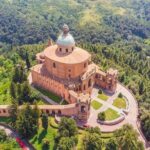
Your walk begins at Neptune’s Fountain, a dramatic point that’s easy to find and great for orienting yourself. From there, you head toward Piazza Maggiore, the kind of plaza that feels like it was designed for gathering, speeches, and people-watching—basically, a good stage for an audio guide.
This is where you’ll hear the narration set the tone: Bologna has been described by art critic John Berger as an improbable city. That line matters because the tour doesn’t treat Bologna like a single-era postcard. Instead, it keeps bouncing between ancient structures, medieval culture, and later intellectual life—so the city starts to feel like a timeline you can walk.
If you’re pressed for time, this first stretch is a smart way to “get your bearings fast.” If you have more time, it’s also where you can slow down without harming the day—because it’s mostly moving through open space and major landmarks.
San Petronio Basilica and the world’s largest sundial
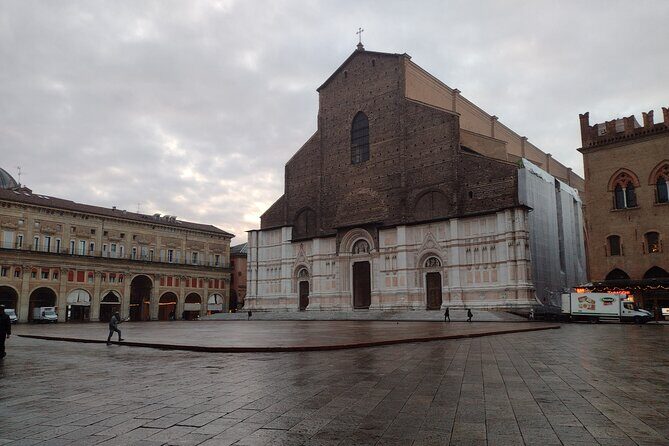
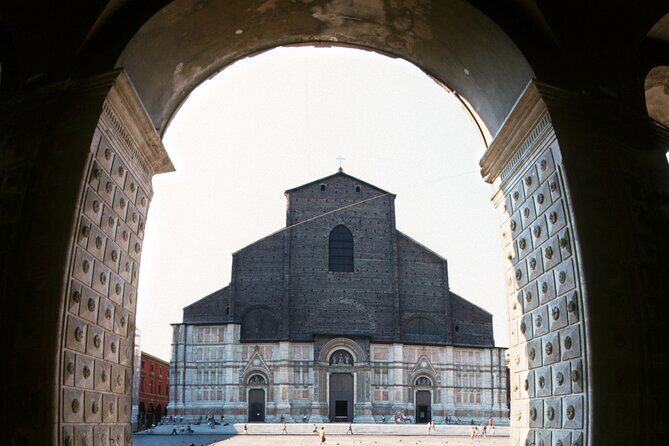
From Piazza Maggiore, the audio brings you to San Petronio Basilica. The highlight here is the world’s largest sundial, and the audio explanation helps you connect what you see to why it’s important. A sundial is more than a quirky object: it’s a statement about timekeeping, science, and the way cities show off their brains in stone.
This stop also works well because it’s visually “anchoring.” You’ll have an obvious place to look while the audio covers context. If you like history but hate long museum lines, this kind of exterior-focused storytelling is a good match.
Potential drawback: because this is not a guided museum experience, you’re not automatically led inside. If your interest is strong enough that you want to enter parts of the basilica or related areas, you’ll need to decide and pay for that separately. The payoff is that you can choose how deep to go.
Roxy Bar and Bologna’s pop-culture wink
One of the more fun course-corrections on this walk is the Roxy Bar, mentioned because it was featured in Vasco Rossi’s song Vita Spericolata (The Reckless Life). This is the tour showing you something practical: Bologna isn’t only medieval churches and scholarly legends. It also has a modern cultural pulse, and sometimes songs point you toward places you wouldn’t otherwise seek out.
I like these moments because they prevent the walk from turning into one long lecture. You’re seeing a real location tied to Italian pop culture, and it gives you an extra way to remember Bologna beyond architecture.
The Two Towers: Dante’s shadow and a skyline moment
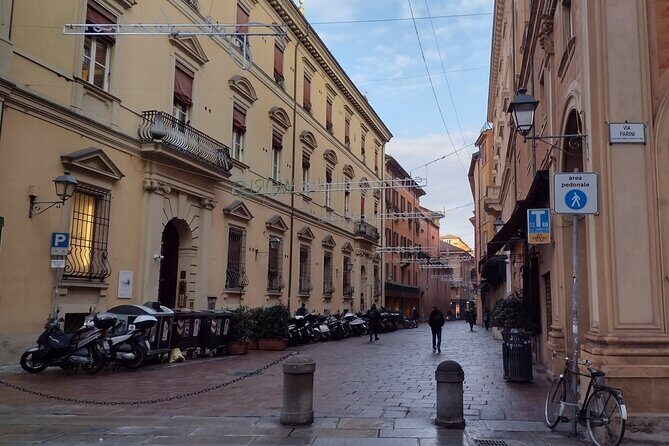
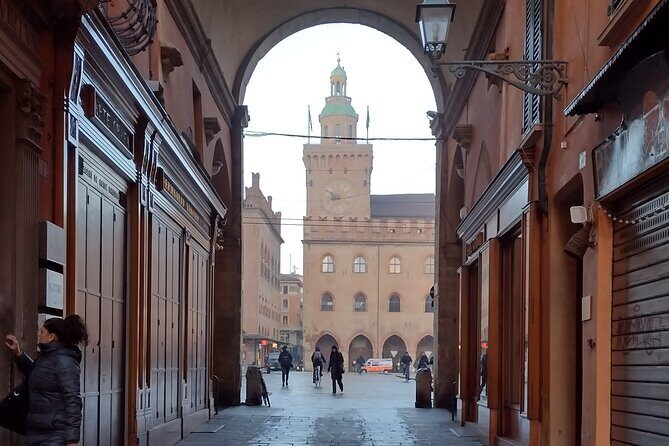
Next up are the Two Towers, one of which has a mention in Dante’s Inferno. If you’ve read Dante (or even if you’ve only heard enough to know he’s not exactly lightweight reading), this is the kind of connection that makes the literature feel more real. A name in a book becomes an actual skyline.
The Two Towers area is also a good place to stand still for a few extra minutes, because it’s easy to take in the geometry. Towers like these aren’t just vertical drama; they represent a city’s power and ambition. And when the audio ties them to Dante, it turns them into part of a bigger story—how Bologna was seen, referenced, and remembered.
Keep in mind: this is still a self-guided audio walk. You’re not being herded into a viewing platform. If you want the best views, you’ll need to pick your angle and spend time doing it.
Other guided tours in Bologna




UNESCO porticos in 2021: walking under something older than you
A big reason people fall for Bologna is the porticos. This tour specifically points you toward the Portici di Bologna, noting that they became a UNESCO World Heritage site in 2021. That framing matters because it helps you understand why you should care: these aren’t just covered sidewalks.
As you stroll beneath them, the audio gives you the “why” behind the experience—how architecture and daily life got linked. Porticos shape the city’s weather survival too. Even when it’s hot or rainy, the walk doesn’t become miserable in the way some cities do.
Practical tip: wear shoes you’re happy to walk in for an hour to 90 minutes. Porticos are comfortable, but they can also tempt you to keep walking longer than you planned.
Santo Stefano’s Seven Churches: a pause for atmosphere
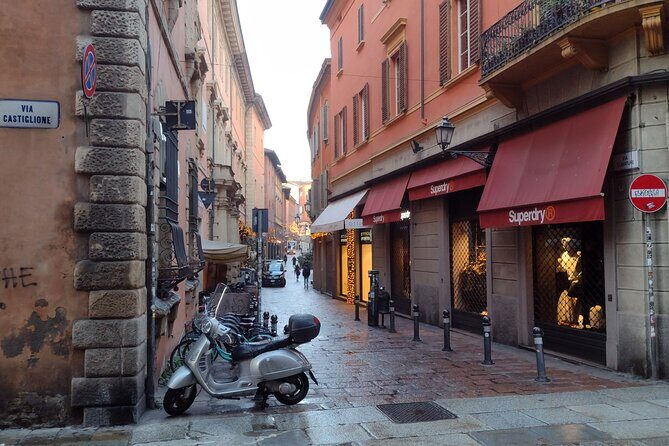
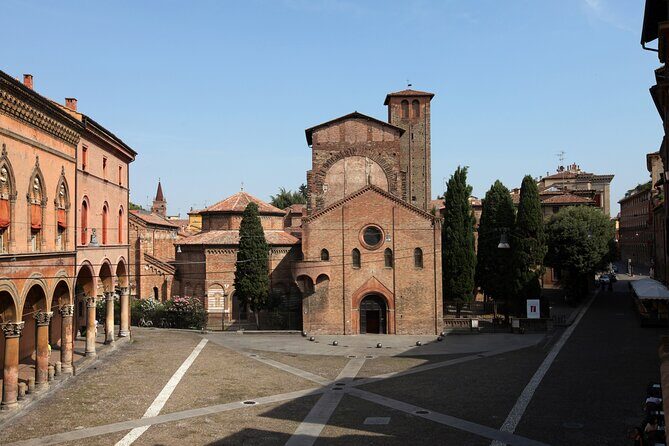
Along the route, you get the option to take in the Seven Churches of Santo Stefano. This is one of those “just seeing it” experiences where the audio can help you understand the layout and significance without turning the visit into a whole day plan.
This stop is also a good test of your own pace. If you’re enjoying the storytelling and want to absorb the vibe, you can linger. If you’re trying to keep this to a quick orientation walk, you can pass through with less time spent.
Again, since the tour is not a guided museum-style visit, you’ll be responsible for any entry decisions. But even without paid entry, the area is a strong part of Bologna’s texture.
Santa Maria della Vita and the feel of neighborhood Bologna
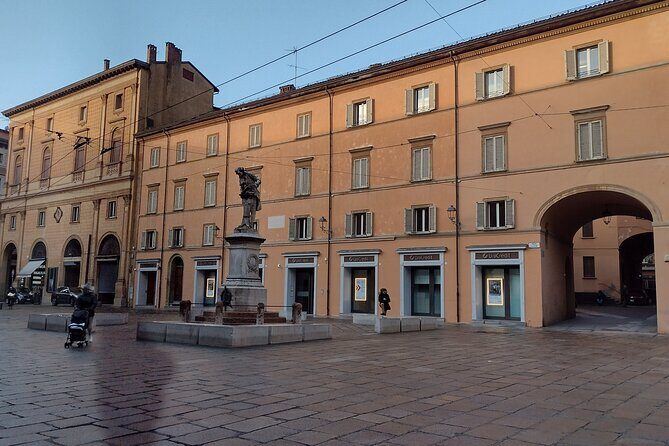
The tour also brings you past Santa Maria della Vita. This kind of stop is less about a single headline attraction and more about what makes the city feel lived-in. Churches and historic buildings along the route give the walk a stronger sense of place than a straight-line “checklist tour.”
What you’ll get here is the benefit of pacing. The audio keeps moving you forward, but the route includes sights you’d normally pass if you were rushing between major stops.
The world’s oldest university start: science and ideas on the street
At some point, you’ll hear about how the world’s oldest university got its start. In Bologna, the university isn’t just “a school.” It’s part of how the city thinks and how visitors can understand the city’s long memory.
The audio approach works well here. Instead of treating education as an abstract idea, it ties it to a specific Bologna story you can connect while walking through the center. Even if you don’t know much about university history, the narration gives you a hook—one that makes Bologna’s intellectual legacy feel like it belongs outdoors, not behind glass.
Piazza Galvani and electrified frogs: the science detour you’ll remember
For a surprising turn, the tour loops past Piazza Galvani and shares scientific experiments involving electrified frogs. This is one of those moments that makes the whole walk stick in your memory, because it’s both weird and human. It also connects Bologna to the kind of curiosity that created modern science.
If you like fun facts that actually connect to real places, you’ll appreciate this part. It’s not random trivia. It’s a Bologna-linked story that lets you end the walk with your brain switched back on.
Ending near Via d’Azeglio: finish where you started
The tour ends back near Via d’Azeglio. The nice thing about having the walk loop back close to the start area is that it doesn’t trap you in a hard-to-reach location at the end. After 60–90 minutes, you’re free to keep exploring on your own—whether that means grabbing gelato, finding a wine bar, or simply walking the porticos again because you can.
Timing, walking comfort, and where this fits in your day
This is designed to take about 1 hour to 1 hour 30 minutes. That’s a sweet spot for jet-lag days and busy itineraries. You can use it as an introduction to Bologna, or as a calmer second activity after a more structured morning.
Since it’s a private experience (just your group), you also avoid the awkward “stop, wait, rush” loop that comes with group tours. The walking pace becomes your decision.
The main trade-off is content depth at each stop. The audio is not a nonstop lecture, and you may feel that some moments are more setting-focused than detail-heavy—especially if you like lots of factual density at every brick. If you’re the type who wants thick, step-by-step historical context at each site, plan to bring your curiosity and maybe spend extra time reading plaques or choosing optional paid entries.
If you’re someone who wants to see key places without a tour guide hovering over you, this is a strong fit.
Who should book this Bologna audio walk?
Book it if:
- You want a flexible self-guided plan that you can start and stop on your schedule.
- You like story-driven walking that ties landmarks to cultural and scientific ideas.
- You’ll be happy with exterior-focused sightseeing and optional paid entry when you choose.
Skip it (or adjust expectations) if:
- You want a guide-led, museum-heavy itinerary with long, inside-the-building narration.
- You expect every stop to be packed with extended facts. Some parts may feel shorter than a classic guided tour.
This tour is also a good companion for food time. You’ll pass through central sights, so you can easily pair it with whatever you’re craving afterward.
Should you book this tour?
I’d book it if you’re visiting Bologna and want an efficient way to understand what you’re seeing. The lifetime access, offline audio, and GPS playback make it low-stress, even if your day changes. And the mix—Neptune’s Fountain, San Petronio’s sundial, the Two Towers with Dante, UNESCO porticos, Santo Stefano, and the Galvani frog experiments—keeps the walk from feeling like one-note history.
If you’re the type who loves super-long, museum-grade explanations at every location, you’ll need to add your own time inside places you care about. But for most travelers who want a smart, independent city story in about an hour and a half, this is a practical value.
FAQ
FAQ
How much does the Bologna Ancient and Recent History self-guided audio tour cost?
It costs $7.99 per person.
How long does the tour take?
The duration is about 1 hour to 1 hour 30 minutes.
Where does the tour start and where does it end?
It starts at Neptune’s Fountain (Piazza del Nettuno, Bologna) and ends back near the starting area, returning to Via d’Azeglio.
What app do I need to use the audio tour?
You’ll use the VoiceMap app on Android or iOS and enter your unique code from your ticket.
Can I use the tour offline?
Yes. The audio, maps, and geodata are available for offline access.
Is museum or attraction entry included?
No. You won’t be guided through museums or other attractions mentioned along the route. If you choose to enter, you’ll need to pay independently.
Is it a private tour?
Yes. It’s listed as private, so only your group participates.
If you tell me when you’re going and whether you prefer shorter walks or deeper stops, I can suggest a good order to pair this with meals and any optional entries you might want.