REVIEW · BOLOGNA
Bologna: Guided Walking Tour
Book on GetYourGuide →Operated by Stephanie Foulkes Tourist Guide ER · Bookable on GetYourGuide
Bologna reads best on foot. This walking tour helps you decode the city fast: why it’s called the red (and the fat and the learned), how the leaning towers fit the legend, and where to look in the medieval center without getting lost. I especially like the way the route uses major landmarks like San Petronio Basilica as story anchors, and I also like the stop that keeps you close to local food culture in the Quadrilatero, where you might see sfogline or pasta makers at work.
One thing to consider: this tour runs rain or shine, so you’ll want shoes and clothing that handle wet streets and long outdoor stretches.
If you care about history, but you don’t want a textbook, this kind of guided walk is a sweet spot. The guides are professional and multilingual (Spanish, English, French, German, Italian, Portuguese), and I’ve seen notes that the guide style can be warm, curious-friendly, and flexible to your interests (including guides like Stephanie and Tiziana in the feedback I reviewed).
In This Review
- Key points to know before you go
- Where Bologna’s symbols make sense: from Maggiore Square onward
- Why this start is valuable for you
- San Petronio Basilica: big space, bigger stories
- Two leaning towers (Asinelli and Garisenda) as a city clue
- Neptune Square: a quick reset with a famous fountain
- Paviglione portico and the Archiginnasio area: where trade meets architecture
- Quadrilatero: the pasta neighborhood vibe (and a possible pasta-maker sighting)
- Santo Stefano: stepping into a mysterious church complex
- After the tour: lingering up the clock tower
- Price and what $70 really buys you in Bologna
- Who this tour fits best (and who might want something else)
- Practical tips to make the most of it
- Should you book this Bologna walking tour?
- FAQ
- How long is the Bologna guided walking tour?
- Is the tour private?
- Which languages are offered?
- Where do I meet the guide?
- Are tickets included for Archiginnasio?
- Is food included during the tour?
- Does the tour run in bad weather?
- Is the tour wheelchair accessible?
- What should I bring?
Key points to know before you go
- Maggiore Square to San Petronio Basilica: a big, awe-worthy start with a lot of context.
- Arcades and porticoes: built for walking, and handy when weather turns.
- Two leaning towers as a city symbol: Asinelli and Garisenda show up early and make sense by the end.
- Paviglione portico and Archiginnasio area: silk-worm market history is part of the story.
- Neptune Square and the fountain: an easy visual reset during the walk.
- Santo Stefano plus a pasta-making chance: you may catch sfogline or pasta makers in action.
Where Bologna’s symbols make sense: from Maggiore Square onward
The tour starts with Maggiore Square, where Bologna’s medieval energy feels concentrated. The square is a smart first move because you can orient quickly: you see the arched colonnades, pick out key buildings, and get the sense that this city was designed for people to wander under cover.
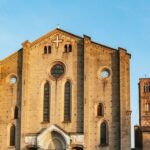
From here, the walk heads into San Petronio Basilica, dedicated to Bologna’s patron saint. Even if you’re not the type to tour churches for fun, this stop has a built-in payoff. The basilica’s interior is described as vast, and that scale changes how you look at the rest of the city. It’s not just decoration. It’s a reminder that Bologna’s power wasn’t only in politics or trade—it was also in religious life and civic pride.
I like that the guide doesn’t treat the basilica as a quick photo stop. Instead, you’ll connect what you see to why it matters in Bologna’s identity. The tour also sets up the famous nicknames—why Bologna is called the red, the fat, and the learned. You’ll hear how these labels get attached to the city’s look, lifestyle, and reputation, and suddenly the medieval center feels more legible.
Other walking tours we've reviewed in Bologna


Why this start is valuable for you
If you’ve ever visited a beautiful Italian city and felt like you were just passing monuments, this tour is built to prevent that. By beginning with the places that act like Bologna’s “main characters,” you’ll understand what’s important before you spend time under arcades and through smaller lanes.
San Petronio Basilica: big space, bigger stories
San Petronio is the kind of church where your brain needs a second to catch up. The tour’s promise here is not just seeing the inside—it’s understanding how scale and symbolism shape the city’s personality.
Here’s what you’ll likely notice as you move from outside to inside:
- The transition from daylight square brightness to an interior that feels dramatically open.
- The way the basilica anchors the route, so later stops don’t feel random.
- The chance to learn why Bologna’s patron saint shows up as a central identity marker.
A potential drawback: if you’re short on time and already tired of churches, you may feel the walk becomes more “civic + religious” than “food-first.” But if you’re willing to enjoy this as a cultural foundation, it pays off when the route later shifts to trade, towers, and the pasta district.
Two leaning towers (Asinelli and Garisenda) as a city clue
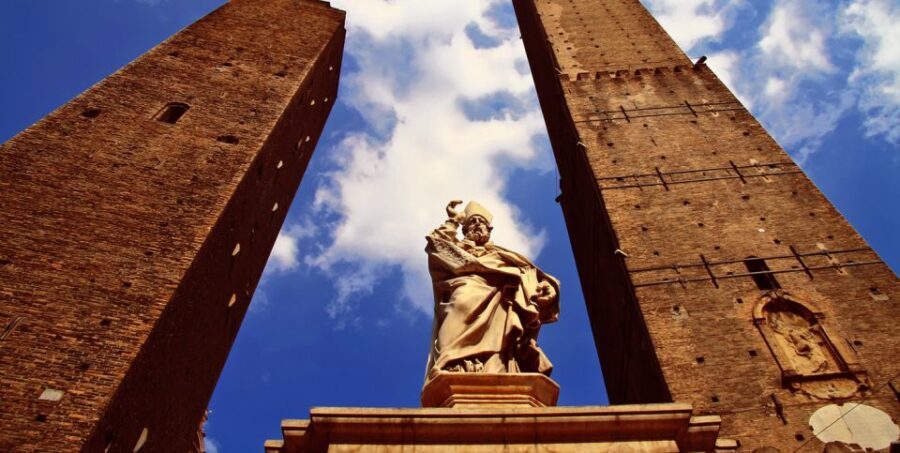
After the basilica, you’ll meet Bologna’s famous symbol head-on: the two leaning towers, Asinelli and Garisenda. This is one of those features that people recognize from postcards, but the tour helps you understand why they matter as part of the city’s story.
The guide also ties in the legends and secrets angle—meaning you’ll get the narrative thread behind what you’re seeing instead of just a general “these are old towers.” The result is practical: when you later spot them from other points around the center, you’ll know what you’re looking at and why people still talk about them.
Neptune Square: a quick reset with a famous fountain
Next comes Neptune Square and the Neptune fountain. This is a very walkable moment in the itinerary because it gives you a visual break after the heavier “big meaning” stops (basilica and towers).
For me, Neptune Square works for two reasons:
- It’s easy to see the fountain as a social meeting point rather than just a statue.
- It’s a break where the guide can shift from legend and symbolism into more everyday Bologna—trade routes, architecture, and how the city grew.
Keep your eyes up and around. The tour route is designed around Bologna’s outdoor architecture, so this stop isn’t just a fountain moment. It helps you read the surrounding buildings and the way the streets organize foot traffic.
Other guided tours in Bologna

Paviglione portico and the Archiginnasio area: where trade meets architecture
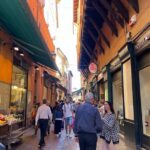
One of the most compelling transitions on this walk is moving through the Paviglione portico toward the Archiginnasio. Porticoes are a major part of Bologna’s character, and this is exactly the kind of place where a guide makes walking feel efficient. You’ll see how the architecture supports daily life—protecting people, shaping movement, and keeping the city functional.
This is also where the tour connects the buildings to older economic life. In the area of the Archiginnasio, you’ll hear that there was once a silk-worm market. That detail changes how you think about the space. Instead of viewing the structures as just historic “nice to look at,” you start imagining commerce, craft, and the flow of goods—and that makes the medieval center feel more real.
Important note: you can see the Archiginnasio area as part of the walk, but tickets if you want to enter are not included. So if you’re hoping for an interior visit, plan for that extra cost.
Quadrilatero: the pasta neighborhood vibe (and a possible pasta-maker sighting)
Now for the part that makes this tour especially appealing if you’re traveling for food culture: the Quadrilatero. This is where the route shifts from monuments and legends into lived craft.
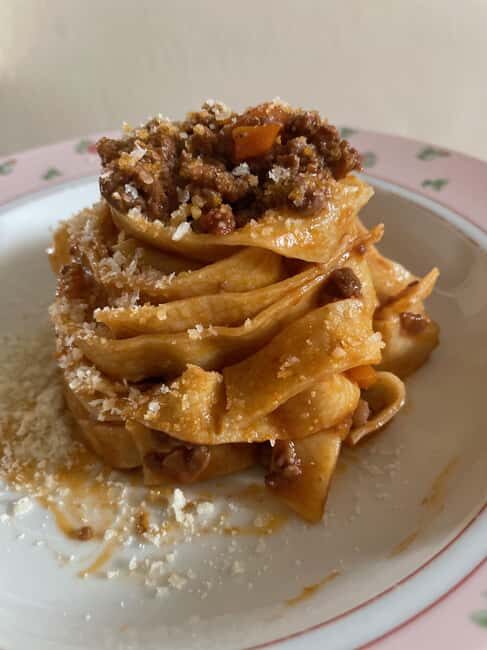
The tour highlights the Quadrilatero as a place to see traditional homemade pasta being made. The exact level of access varies, but you may get a chance to see sfogline—pasta makers—working. Even if you just catch a glimpse, it’s still a valuable moment because it’s tied to Bologna’s daily identity, not a staged demo.
If you’re the type who thinks food is part of history, you’ll enjoy how the guide connects what you’re seeing to the bigger city story. Bologna’s reputation isn’t only about famous dishes—it’s about the culture of making. A good guide helps you notice the small things that make pasta-making more than a tourist activity: the technique, the pace, the sense of routine.
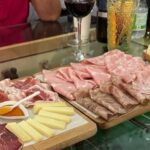
One possible consideration: food and drinks aren’t included. So if you’re hungry at the end, you’ll want a plan to grab something on your own after the tour—either a quick bite nearby or a longer meal once you’ve had time to wander.
Santo Stefano: stepping into a mysterious church complex
The walk then moves to Santo Stefano, described as a mysterious church stop. This is a good choice after the pasta district moment because it shifts your senses back toward architecture and atmosphere.
Why this matters on a guided tour: when you come from a food-focused section of the day, religious sites can feel like a hard left turn. Here, the guide’s storytelling is what bridges the gap. You’ll get context so the stop doesn’t become a “just another church,” but instead a piece of how Bologna’s spiritual and civic identity overlap.
If you want photos, bring patience. Church exteriors and interiors often come with lighting and crowd variables, and the tour format means you’ll be moving in a steady rhythm.
After the tour: lingering up the clock tower
At the end, the tour includes the idea of lingering and heading up the clock tower. That’s a satisfying finale because it rewards you for all the earlier walking and architecture-spotting. Once you climb toward a higher vantage point, Bologna stops feeling like a maze and starts feeling like a planned grid of stories—squares, towers, arcades, and churches you can finally place in your mind.
Even if you don’t climb as high as you hope, the key benefit is the timing: the tour helps you build the map first, then the view becomes meaningful.
Price and what $70 really buys you in Bologna
At $70 per person for a 2 to 4 hour guided walking tour, you’re paying for interpretation—not just for movement through the city.
Here’s what’s included:
- A professional tour guide
- A structured route through major sights and key neighborhoods
- A tour experience in multiple languages
- Support for private group options
What’s not included:
- Food and drinks
- Tickets if you want to enter the Archiginnasio
So is it good value? For me, it makes sense if you want your time in Bologna to feel efficient and connected. You’re not paying for a fancy vehicle or a museum ticket bundle—you’re paying for someone to translate what you’re seeing: the meaning behind nicknames, the symbolism of Asinelli and Garisenda, and the link between trade history (like silk worms) and the city’s later culinary identity.
If you’re the kind of traveler who loves to wander without guidance and already knows the city’s context, you might find the cost harder to justify. But if you want Bologna to make sense quickly, this price sits in a reasonable zone for a guided, multi-sight route.
Who this tour fits best (and who might want something else)
This guided walking tour is a strong match for you if:
- You enjoy history, but you want it explained in a way that keeps moving.
- You like Bologna’s arcades, squares, and tower symbolism more than you like hopping between far-flung neighborhoods.
- You’re interested in food culture, especially pasta-making craft in the Quadrilatero.
You might consider a different format if:
- You dislike long walking days (even though it’s only 2 to 4 hours, it’s still steady).
- You’re mainly looking for a full meal experience, because food and drinks aren’t included.
Practical tips to make the most of it
Bologna rewards preparation. Since this tour runs rain or shine, you’ll enjoy it more if you:
- Wear comfortable shoes (non-negotiable for porticoes and uneven stone).
- Dress for weather changes and keep a layer handy.
- Bring a small umbrella or rain shell if rain is likely.
Also, meeting point can vary depending on the option booked, and you may meet in front of Neptune Fountain if you choose to meet there rather than optional pickup. That’s normal for city-center walks, but it’s worth checking your exact start point before you head out.
Should you book this Bologna walking tour?
I’d book this tour if you want Bologna to feel less like a random collection of beautiful buildings and more like a story you can follow. The standout value is the mix: major symbols (towers), civic-religious anchors (San Petronio, Santo Stefano), and a food-adjacent experience (Quadrilatero with a chance to see sfogline or pasta makers). For $70, you’re buying a guided brain that turns “pretty sights” into “I get it.”
If your top priority is strictly restaurant hopping or you don’t care about churches, trade history, or civic legends, you may feel stretched. But if you like walking tours that explain why Bologna is Bologna, this one fits.
FAQ
How long is the Bologna guided walking tour?
It runs for 2 to 4 hours, depending on the starting time and option selected.
Is the tour private?
A private group option is available.
Which languages are offered?
The live tour guide is available in Spanish, English, French, German, Italian, and Portuguese.
Where do I meet the guide?
The meeting point may vary depending on the option booked. You can also meet in front of the Neptune Fountain, or choose optional pickup outside your accommodation if it’s in the city centre.
Are tickets included for Archiginnasio?
Tickets are not included if you want to enter the Archiginnasio.
Is food included during the tour?
Food and drinks are not included.
Does the tour run in bad weather?
Yes, it takes place rain or shine.
Is the tour wheelchair accessible?
Yes, the tour is wheelchair accessible.
What should I bring?
Bring comfortable shoes and comfortable clothes, plus weather-appropriate clothing.