REVIEW · BOLOGNA
Bologna: Classic Private walking Tour
Book on GetYourGuide →Operated by BOLOGNA TOUR & BEST ITALY TOUR · Bookable on GetYourGuide
Bologna can look like a postcard, but the tour makes it click as a real city. I like the UNESCO porticoes for how they shape the streets, and I like the food tasting voucher that gives the experience a practical, delicious payoff. One thing to plan for: you’ll be walking for about 2.5 hours, and if your route includes churches, you’ll need clothing that fits their rules.
This is also the kind of private tour that feels guided, not generic. The focus is on history, plus those less-frequented corners of Bologna, and the pace works well for seeing major sights without turning your day into a sprint.
If you hate crowds, this format helps. If you don’t like churches, you might find that portion less interesting, but the main sights are explained in a way that keeps it moving.
In This Review
- Key points before you go
- Bologna Porticoes, Expert Storytelling, and the Private Format That Actually Helps
- Start at Piazza del Nettuno: Your Quick Compass in the City Center
- UNESCO Porticoes: More Than a Pretty Facade
- Basilica of San Petronio: The 4th-Largest Church and Its Giant Sundial
- Old Marker Area and Quadrilatero Food Streets on Foot
- Spotting Rare Renaissance Architecture Along the Route
- The Food Tasting Voucher: A Small Taste That Works With Your Schedule
- Price and Value: Is $135.94 Worth It for 2.5 Hours?
- Pace, Languages, and How to Use a Private Tour to Your Advantage
- Dress Code for Churches: The Practical Rule That Can Save Your Day
- Should You Book This Bologna Classic Private Walking Tour?
- FAQ
- How long is the Bologna Classic Private walking Tour?
- Where does the tour start and end?
- What’s included in the price?
- What languages are available?
- Is this tour wheelchair accessible?
- What should I wear when the tour visits places of worship?
Key points before you go

- Neptune Square start makes it easy to orient yourself fast in central Bologna
- Porticoes experience gives you the logic of Bologna’s streets, not just the scenery
- Basilica of San Petronio includes the world-famous sundial stop
- Quadrilatero walk takes you through the old food-markets area at a human pace
- Private group means the guide can tailor attention to your interests
- Food tasting voucher adds a real local bite, not just photos
Bologna Porticoes, Expert Storytelling, and the Private Format That Actually Helps
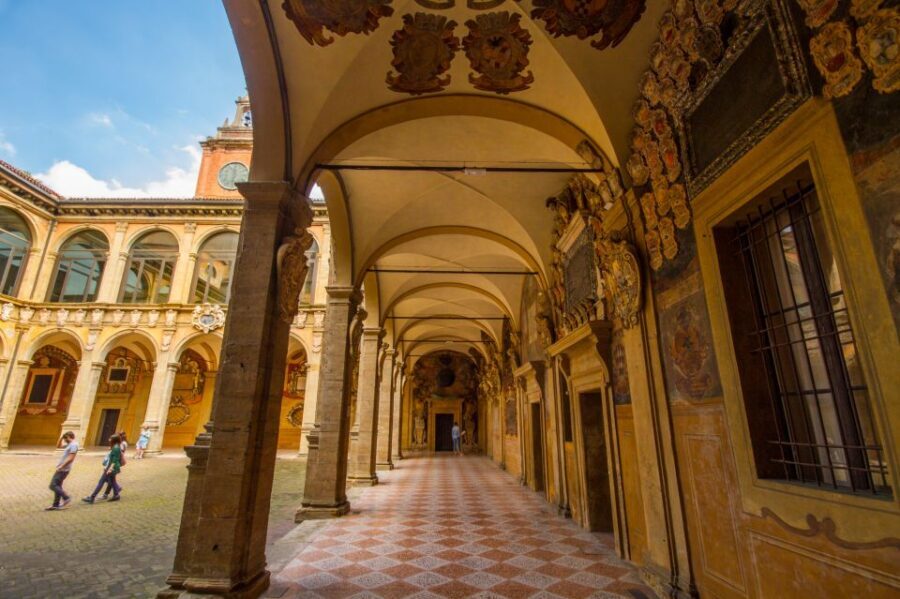
Bologna’s porticoes aren’t just pretty. They’re a system. On this walk, I love how the guide uses the porticoes to explain how the city functions—where people move, why the sidewalks feel sheltered, and how those long arcades became part of everyday life.
The private format matters more than you might think. You’re not watching someone else’s tour through a crowd. You can ask questions, slow down when something catches your eye, and generally keep control of your own pace. In a city with layered streets and overlapping eras, that flexible attention makes the history feel usable rather than lecture-like.
Expect an English-speaking (and also Italian, French, Spanish) guide who leans into art and history in a serious way. You’ll likely notice how the explanations connect buildings to the people and ideas that shaped Bologna, instead of treating sights like disconnected bullet points.
Other private guided tours in Bologna

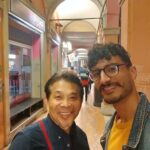
Start at Piazza del Nettuno: Your Quick Compass in the City Center

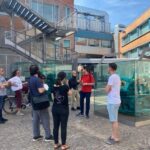
The tour meets at Piazza del Nettuno, 40124 Bologna (Piazza del Nettuno 1a). Starting here is smart. It’s central enough that you can recover quickly if your timing is off, and it anchors the walk in the heart of the city rather than pushing you out to a distant pickup spot.
From the first steps, the guide orients you on what you’ll see and why it matters. If you like getting bearings fast, you’ll appreciate how the route starts with a clear base point. And if you’re the kind of traveler who enjoys seeing how a city’s layout shapes daily life, the Neptune Square beginning gives you that context early.
You’ll then work through the classic Bologna look: streets designed around pedestrian flow and arcades that turn weather into background noise. Even if you’re visiting on a cloudy day, the porticoes keep the walk comfortable.
UNESCO Porticoes: More Than a Pretty Facade

You’ll spend time admiring Bologna’s porticoes, described as a UNESCO World Heritage feature. That label can sound like a sticker, but on the ground it’s obvious why it earns attention. The porticoes create a covered “second street,” where the city feels walkable in every season.
Here’s what I find most useful: the guide doesn’t just point upward. You’ll learn how these structures connect neighborhoods and how their design changes the feel of the street at human speed. It’s the difference between seeing an attraction and understanding why it exists.
Also, porticoes make photography easier without turning the experience into a photo shoot. You can watch people move, see shop fronts and building textures, and get that Bologna atmosphere without forcing long detours.
Basilica of San Petronio: The 4th-Largest Church and Its Giant Sundial
One of the biggest stops is the Basilica of San Petronio, highlighted as the 4th largest church in Italy. Even if you’ve seen big churches before, the scale here feels deliberate, like it was built to command attention.
The tour includes an especially memorable detail: the church hosts the biggest sundial in the world. That’s the kind of fact that helps you notice more than you would on your own. You’ll likely look for the sundial features with a new mindset—why it’s there, what it measured, and why a church space would include something so practical.
The best part is that this isn’t just a wow moment. The guide’s style (focused on art and history) helps you understand why the basilica fits Bologna’s identity. You’re not only taking in architecture; you’re learning how science, faith, and public life could overlap in one place.
If you’re short on time in Bologna, this stop alone can justify the tour. But the bigger value comes from how it’s woven into the rest of the walk—so you leave with a clearer mental map of the city.
Old Marker Area and Quadrilatero Food Streets on Foot
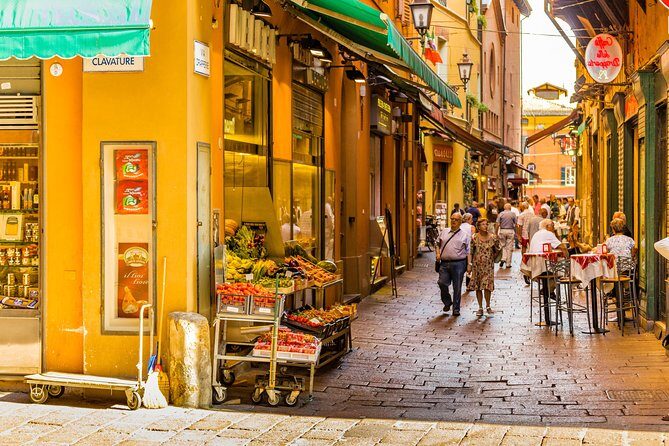
After the major landmark work, you shift into a more atmospheric section of the city: the Quadrilatero, the old market area often associated with boutique food shopping and small-goods culture.
This is where Bologna feels most like a local routine. The guide helps you move through the lanes without turning the stop into a maze. You’ll see the kind of storefronts that thrive in narrow streets and learn how this area became a magnet for food-focused shops.
This part of the tour is also useful if you’re a “plan later” traveler. Even if you don’t buy anything right away, you’re building a shortlist of places you can revisit after the guided time ends. The guide’s commentary keeps you from treating it like a generic shopping street.
One caution: this area can feel busy depending on the day and hour. It’s not the tour guide’s issue—it’s just the nature of market streets. The private group helps you keep your head above the crowd and still enjoy the details.
Other walking tours we've reviewed in Bologna

Spotting Rare Renaissance Architecture Along the Route
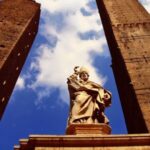
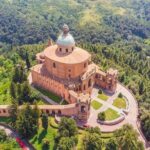
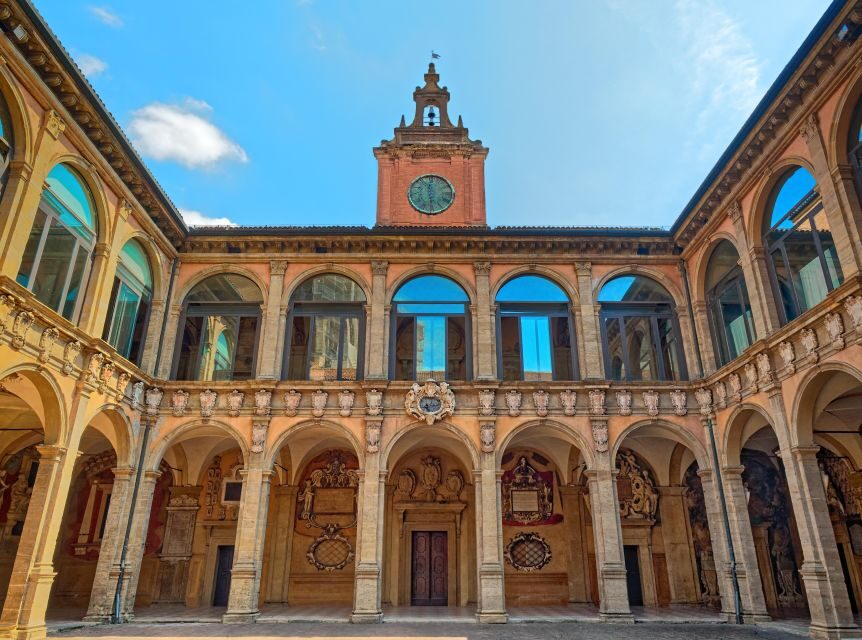
The tour highlights seeing a piece of rare Renaissance architecture. That matters because Bologna isn’t only about medieval towers and old stone textures. When you get a specific Renaissance reference, you start noticing proportions, details, and how design choices communicate power, learning, and civic pride.
What I like about this element is that it expands your understanding beyond the most famous postcard views. Even if you come into Bologna thinking you’ll photograph arcades and churches, the Renaissance stop gives you another lens. It’s a reminder that the city developed in layers.
You don’t need a background in art history to enjoy it. The guide’s explanations help you connect what you see to the era it came from, and that makes the buildings feel less random.
The Food Tasting Voucher: A Small Taste That Works With Your Schedule
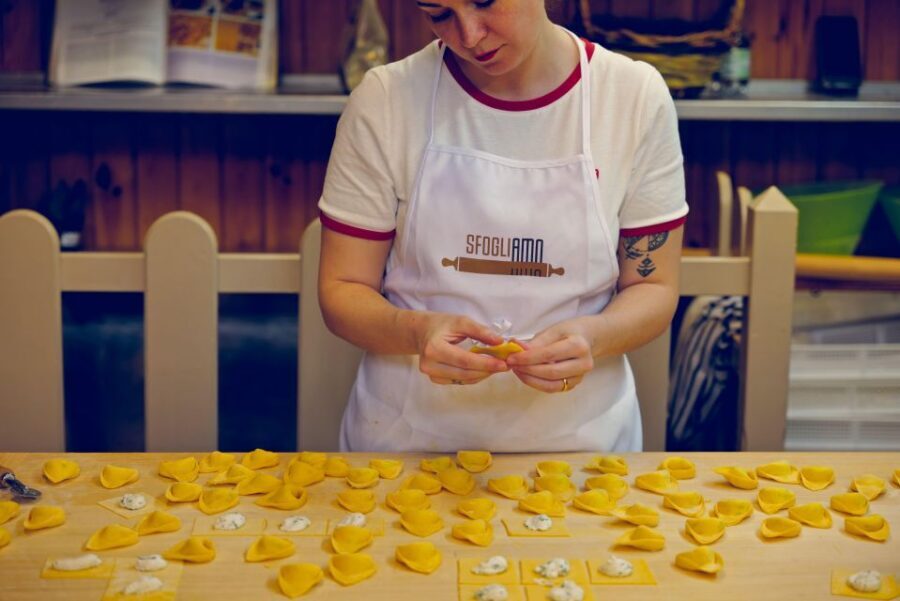
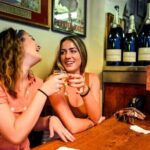
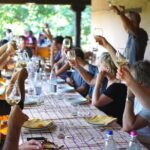
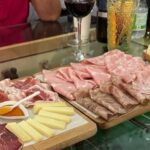
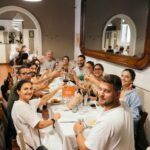
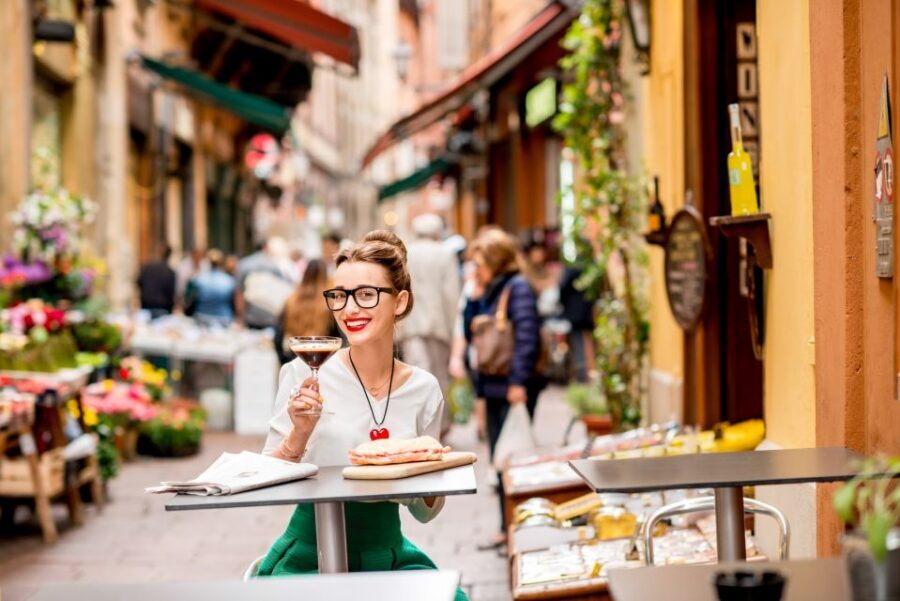
The tour ends with a small food tasting in the city centre, using a voucher included in the price. I like this kind of ending because it’s compact. You get a local taste without losing half your afternoon to a full sit-down meal.
And since the tasting comes after your walk through major sights and market streets, it lands in the right emotional spot. You’ve already learned what Bologna is about, so the food feels like a natural continuation rather than a separate activity.
A practical note: because it’s a voucher-based tasting, you’ll want to be ready to follow the guide’s instructions for redemption and timing. If you have allergies or strong dietary needs, you should ask ahead of time—those specifics aren’t spelled out in the tour details here.
Price and Value: Is $135.94 Worth It for 2.5 Hours?
At $135.94 per person, this isn’t a cheap group stroll. So you should ask: what do you get that you can’t easily recreate on your own?
Here’s the value case I see:
- You’re paying for a live guide who connects sights into a coherent story, not just a map route.
- The itinerary focuses on high-impact stops: porticoes, Basilica of San Petronio, and the Quadrilatero area.
- You also get an included food tasting voucher, which turns the tour into more than sightseeing.
- You’re in a private group, which usually means less time waiting and more time asking questions.
If you’re traveling solo or as a pair, you may also find the private format helps you avoid the frustration of trying to follow a public tour while navigating streets on your own. But if you’re the type who loves free roaming and hates fixed timings, you might prefer a DIY route.
For many people, though, the math works out because Bologna is walkable and intense in details. A good guide saves energy and helps you see more with less guesswork.
Pace, Languages, and How to Use a Private Tour to Your Advantage
This tour runs for about 2.5 hours on foot, and the meeting point is back at Piazza del Nettuno at the end. That timing is long enough to cover major sights and market streets, but short enough that you still have room to explore afterward.
The guide is offered in multiple languages: English, Italian, French, and Spanish. If you speak one of those, it’s a real quality-of-experience boost. You’ll catch subtler points and ask follow-up questions without losing the thread.
Because it’s a private group, you can use the tour strategically:
- Ask what to see next based on your interests.
- If you’re more into architecture than food (or vice versa), you can focus attention.
- If you want photos, you can pause without feeling like you’re holding up a big group.
Also included is skip the ticket line. Even when you’re mostly walking outside, that kind of small time saver matters when you’re on a tight Bologna schedule.
Dress Code for Churches: The Practical Rule That Can Save Your Day
Bologna has churches you may want to see up close, and this tour includes a church stop. The key instruction is simple: for places of worship, you need appropriate clothing—no vests, tops, shorts, or miniskirts.
I treat this as a checklist, not a suggestion. Pack something that covers appropriately even if you’re dressed for warm weather. It’s the difference between walking in with confidence and scrambling to find a workaround.
Comfort matters too. Since this is a walking tour, wear shoes that can handle cobblestones and lots of time on your feet. If your footwear is already an issue, the 2.5 hours can feel longer than it should.
Should You Book This Bologna Classic Private Walking Tour?
Book it if you want a focused, high-value walk that combines porticoes, San Petronio, and the Quadrilatero with a guide who can explain the why behind what you’re seeing. The private format is a strong match for travelers who like asking questions and getting a route that actually makes sense.
Skip it only if you prefer total freedom over structure, or if church stops won’t work for your interests. If that’s you, a self-guided plan might suit better.
If you’re on the fence, here’s my quick decision rule: if you want a short Bologna experience that feels guided and practical, this tour is a solid choice. You’ll leave with a clearer sense of how Bologna works, plus enough food satisfaction to keep your next stop delicious.
FAQ
How long is the Bologna Classic Private walking Tour?
It lasts 2.5 hours.
Where does the tour start and end?
It starts at Piazza del Nettuno, 1a (Piazza del Nettuno, 40124 Bologna BO, Italia) and ends back at the same meeting point.
What’s included in the price?
You get a tour guide and a 1 food tasting voucher. The tour also includes skip the ticket line.
What languages are available?
The live guide is available in English, Italian, French, and Spanish.
Is this tour wheelchair accessible?
Yes, it is listed as wheelchair accessible.
What should I wear when the tour visits places of worship?
Wear appropriate clothing: no vests, tops, shorts, or miniskirts.